Reviewed · KRAKOW TOURS
Guided Tour in Kraków-Płaszów Former Concentration Camp
Płaszów sits within Kraków, not at the end of a long day trip. The former concentration camp is now a broad, uneven, largely undeveloped area in the city, and walking it with a guide helps you see the wartime site in the middle of its present-day surroundings.
I like two things about this tour: it connects Płaszów with nearby reminders of the Kraków Ghetto, including Ghetto Heroes Square and an original wall fragment, and it gives you a guide to explain the history rather than leaving you to make sense of an open site alone. If Olga leads your walk, she has also helped visitors with tram tickets.
One consideration: this is a serious visit to a place of persecution, not a conventional museum with a polished sequence of indoor exhibits. The camp area is uneven and largely undeveloped, so wear shoes that feel secure underfoot and be ready to spend time outdoors.
What to know before you book
- The route links three places: Ghetto Heroes Square, the former Płaszów camp, and a surviving fragment of the Kraków Ghetto wall.
- The camp is the main stop: The guided visit there lasts about an hour, within an overall tour of approximately two hours.
- The setting is open and uneven: Płaszów is a large, mostly undeveloped area, so expect walking on rough ground rather than museum floors.
- The group is capped at 25: That limit can make it easier to hear and ask questions, though the actual group may be smaller.
- The tour is in English: It includes a mobile ticket and starts near Ghetto Heroes Square.
- The listed price is $30.01 per person: The camp stop itself has no admission charge, so you are paying for the guided context and route.
Starting at Ghetto Heroes Square
The tour begins at Apteka pod Orłem, at Plac Bohaterów Getta 18. From there, the route introduces you to Ghetto Heroes Square, a place whose present-day design gives you a first way to consider loss and forced departure.
The square was once called Plac Zgody. After the war, it became Ghetto Heroes Square and received a small monument, but the space was later used as a public toilet and parking lot. Its renovation in 2005 prompted debate over the design.
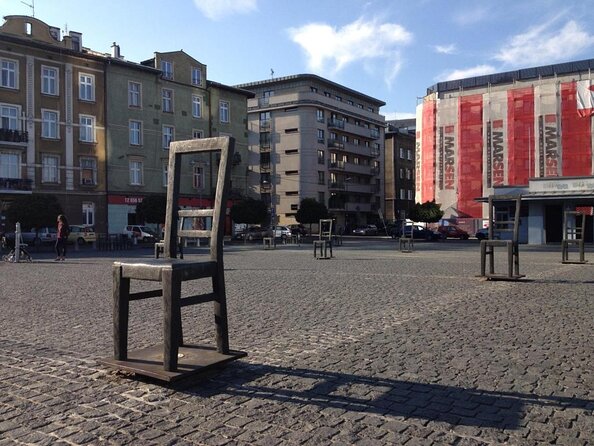
Today, 70 large metal chairs are spaced across the square. They represent departure and the absence left behind. The chairs are simple, but their scale and spacing make the open square feel less like an ordinary plaza and more like a memorial. I find this a useful first stop because it asks you to pause before moving on to the former camp.
The square is across the river in Podgórze, the suburb associated with the Kraków Ghetto. A guide can help connect the memorial’s spare design to the history of the place, rather than leaving you to guess at the meaning of the chairs. This is a brief but meaningful introduction, not a long museum visit.
More guided departures around Krakow:
- From Krakow: Auschwitz-Birkenau Guided Tour & Hotel Pickup
★ 4.5 · 33,358 reviews - From Krakow: Auschwitz-Birkenau Guided Tour & Hotel Pickup
★ 4.5 · 29,340 reviews - Krakow: Auschwitz Guided Tour with Optional Hotel Pickup
★ 4.5 · 15,280 reviews
Walking the former Płaszów camp
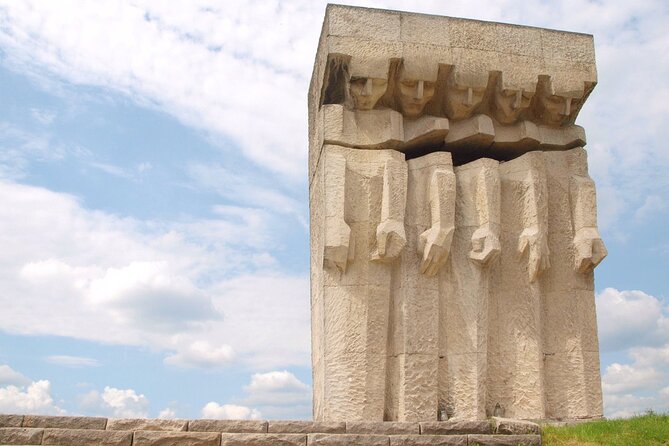
Płaszów is the heart of the experience. The former German Nazi concentration camp is in Podgórze, on land that now feels strikingly open for a place so close to city streets, shops, and homes. The camp area is described as vast, uneven, and largely undeveloped.
That contrast matters. You are not entering a neatly arranged exhibit where each room gives you a clear label and timeline. Much of what you encounter is open ground, and the guide’s explanations help you understand the wartime significance of a place that can otherwise seem at first glance like an ordinary patch of city land.
The guided visit at the camp lasts about one hour. Across the full two-hour tour, that gives you time to listen, look around, and ask questions without turning the walk into an all-day commitment. The guide’s role is especially important here: the site’s appearance alone cannot tell you what happened or how it connects to Kraków’s wider Holocaust history.
The experience is also a reminder that Kraków’s Holocaust history is not confined to a distant memorial site. Many people use the city as a starting point for visiting Auschwitz, but Płaszów is within Kraków itself. Visiting it adds another place to your understanding of the city and its wartime past.
Go at a thoughtful pace. The terrain is uneven, and the area is not presented as a conventional indoor attraction. A comfortable pair of walking shoes is a sensible choice. The supplied information says most people can participate, but anyone who finds rough ground difficult may want to consider that before booking.
Connecting the camp to the Kraków Ghetto
The route’s strength is that it places Płaszów alongside sites connected with the Kraków Ghetto. Ghetto Heroes Square and the surviving wall fragment are not decorative additions to the walk; they help you understand the geography and remembrance of the city’s wartime history.
After the camp, the tour passes a 12-metre fragment of the original ghetto wall. A commemorative plaque in Hebrew and Polish recalls that people lived and suffered there, and that many were sent onward to death camps. The surviving section is small, but its physical presence gives the history a scale you can see directly.
This stop works best as a moment of reflection, rather than as a large attraction in its own right. You are looking at a fragment of wall, not a full preserved complex. The guide’s explanation can help make clear why this remnant matters and how it fits into the larger route.
Together, the three stops provide a useful progression: a public memorial, the broad former camp grounds, and a piece of the ghetto boundary. You get more context than you would from visiting one location on its own, while the route stays focused on Kraków.
What the guide adds
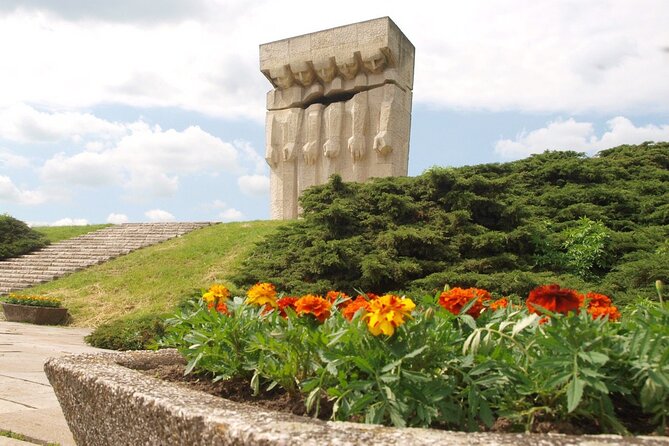
At Płaszów, interpretation is not an extra perk. It is the difference between walking through open ground and understanding why the place matters. The tour is designed to explain tragic events and place them in the context of Kraków during the Holocaust.
A guide named Olga has led the walk and is described as prepared, kind, and willing to help with tram tickets. That practical help can be welcome if you are still working out local transport. Another guide has also been described as explaining the site in detail from beginning to end, though the specific person leading your departure may vary.
The maximum group size is 25. That is a cap, not a promise that every tour will reach it. A smaller group can make it easier to hear the guide and ask a personal question; one reported walk had only three people. You should not count on having a private or nearly private tour, but the group limit is still a useful detail when deciding what kind of visit suits you.
Other tours around Krakow worth your time
- Krakow–Zakopane: Cable Car, Chocholow Baths, Cheese & Vodka
★ 5.0 · 10,720 reviews - Krakow: Auschwitz-Birkenau Guided Tour with Pickup & Lunch
★ 4.5 · 9,800 reviews - From Krakow: Wieliczka Salt Mine Tour
★ 4.6 · 9,393 reviews - Krakow: Auschwitz-Birkenau Guided Tour Pickup/Lunch Options
★ 4.5 · 9,057 reviews
Is $30.01 good value?
At the listed price of $30.01 per person, this is a guided two-hour walk rather than an admission ticket to a major indoor attraction. The camp stop itself is listed with free admission. The value lies in having someone explain the sites and link them together, particularly at Płaszów, where the open, undeveloped setting offers little built-in interpretation.
If you already know the history well and want only to walk the grounds independently, you may not need a guided tour. But if you want a clearer account of Kraków during the Holocaust, the guide is the reason to pay. The route also covers more than the camp, including the square and wall fragment, so you leave with a broader sense of how these places relate.
The two-hour length is practical if your schedule is full. It gives the former camp a substantial share of the visit without requiring a full day. The trade-off is that this is an introduction, not an exhaustive study of Kraków’s wartime history. If you want more depth, you can use the tour as a starting point for further visits and reading.
Practical details for the walk
The meeting point is Apteka pod Orłem, Plac Bohaterów Getta 18, in Kraków. The tour ends at the bus stop at Henryka Kamieńskiego 57. Since the start and finish are different, check the route between them before arranging your next stop.
The experience is offered in English, uses a mobile ticket, and is near public transportation. Confirmation is provided at booking. It lasts approximately two hours, with about one hour at Płaszów, and the group is limited to 25 people.
The tour is often booked about 29 days ahead on average. That is a planning clue, not a guarantee that it will sell out, but booking ahead makes sense if your Kraków dates are fixed. Free cancellation is available up to 24 hours before the start time. Changes or cancellations made less than 24 hours before the start are not accepted for a refund.
Who should take this tour?
This walk suits you if you want a grounded introduction to Kraków’s Holocaust history and prefer a guide to help interpret places that are not laid out like a museum. It is particularly useful if Płaszów is on your list but you are unsure how to understand the large, open site on your own.
It may be less suitable if you want a light sightseeing stroll or an indoor exhibition with extensive displays. The subject is grave, and the terrain is uneven. Give yourself the time and attention to take the visit seriously.
Should you book it?
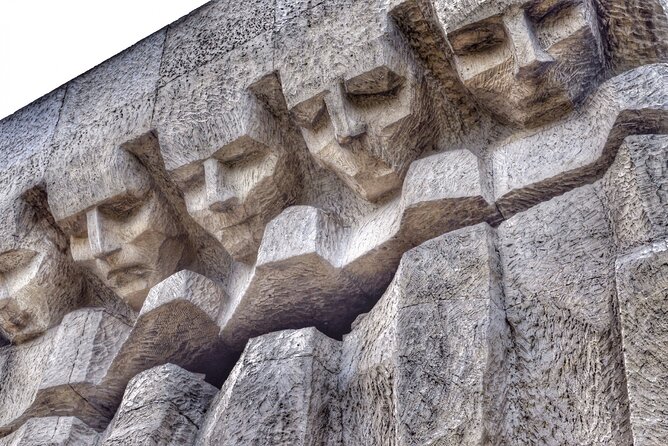
Book this tour if you want to see Płaszów in context, with the Ghetto Heroes Square and wall fragment adding important points of reference. At $30.01 for about two hours, the cost is most defensible for the guide’s explanations, not for admission to the grounds.
Skip it if you would rather explore independently and are comfortable researching the site yourself. For most people seeking a thoughtful, focused way to understand this part of Kraków, the guided walk offers a practical and worthwhile introduction.
FAQ
How long is the tour?
It lasts approximately two hours. The guided visit at the former Płaszów camp takes about one hour.
What language is the tour offered in?
The tour is offered in English.
Where does the tour start?
It starts at Apteka pod Orłem, Plac Bohaterów Getta 18, Kraków.
Where does the tour end?
It ends at the bus stop at Henryka Kamieńskiego 57, Kraków.
How large can the group be?
The maximum group size is 25 people.
Can I cancel for a refund?
Yes. You can cancel up to 24 hours before the experience’s start time for a full refund. Cancellations made less than 24 hours before the start time are not refunded.
Newly listed around Krakow
- Private Krakow to or from Airport Transfer★ 5.0 · 17 reviews
- Private Airport Transfer from/to Krakow Balice Airport★ 5.0 · 124 reviews
- Private Full-Day Zakopane and Thermal Baths Tour from Krakow★ 5.0 · 27 reviews
- Krakow: Polish Aviation Museum – Skip the Line Ticket★ 4.5 · 13 reviews
- Private Guided Walking Tour in Krakow Wine Bars★ 5.0 · 16 reviews
- Pierogi Cooking Class: Mastering the Art of Polish Dumplings★ 5.0 · 129 reviews
- Polish Countryside and Tyniec Abbey Bike Tour from Krakow★ 5.0 · 37 reviews
- Krakow Jewish District and Ghetto Guided Tour in a Small Group★ 5.0 · 12 reviews
Krakow Tours, compared.
Auschwitz-Birkenau Guided Tour & Hotel Pickup
Read our review →
Auschwitz Guided Tour with Optional Hotel Pickup
Read our review →
Zakopane: Cable Car, Chocholow Baths, Cheese & Vodka
Read our review →
Auschwitz-Birkenau Guided Tour with Pickup & Lunch
Read our review →
Krakow to Auschwitz Birkenau Guided Tour with Transfer and Ticket
Read our review →