
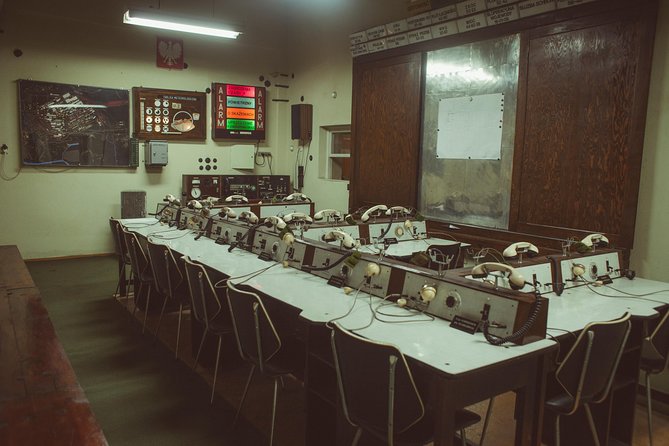
Reviewed · NOWA HUTA TOURS
Nowa Huta Steel Mill Administration Buildings and Shelters with local NGO
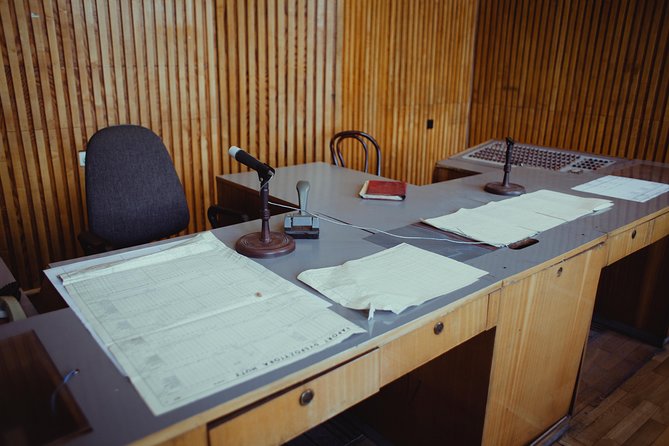
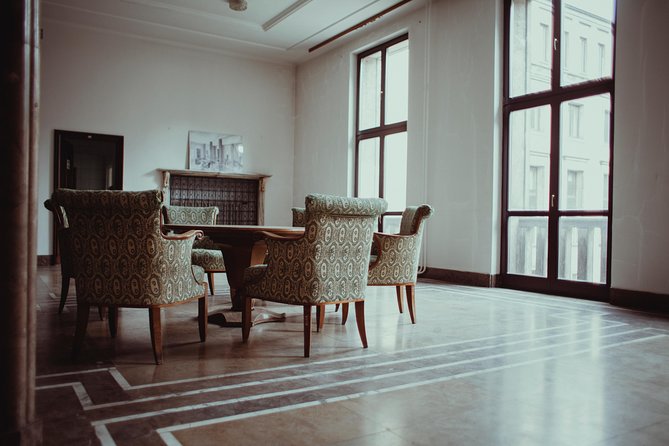
Nowa Huta’s former steelworks offices offer a rare look at the machinery of everyday communist-era life: meeting rooms, administrative spaces and an underground Cold War shelter, all inside buildings that have seen little change since the steelworks’ working years. This is not a distant view of history through a museum display. You walk through the rooms themselves.
I like two things in particular: the chance to see the shelter and offices together, and the guides’ close knowledge of the steelworks and the district. Guides such as Mateusz have family ties to the plant, which can make the story feel rooted in local life rather than delivered from a textbook.
One consideration: the buildings are aging and the tour is focused on industrial and political history. If abandoned interiors and long explanations are not your thing, you may find the roughly two-hour visit a little slow.
At a glance
- Offices left largely as they were: Walk through administrative rooms in the former Lenin Steelworks buildings.
- A Cold War shelter below ground: Descend into the underground shelter, one of the tour’s most distinctive spaces.
- History with a local voice: Guides such as Mateusz connect the plant’s story to Nowa Huta and, in his case, family ties.
- More than architecture: Hear about Poland’s communist past, the factory’s role and the way life in Nowa Huta changed over time.
- A small group, not a big production: The group is capped at 15, and the tour runs about 90 minutes to two hours.
Inside Nowa Huta’s steelworks offices
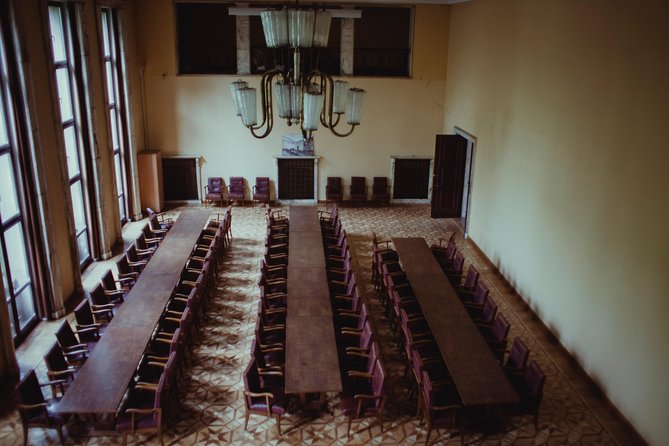
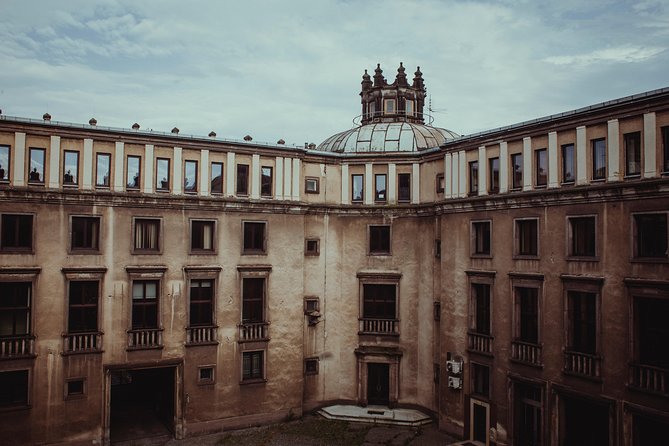
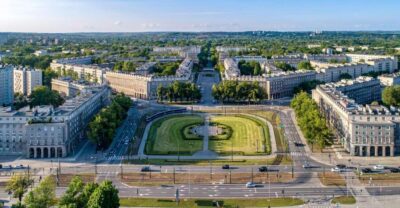
Nowa Huta is a classic example of Socialist Realist architecture, and the former steelworks administration buildings show how that style worked in a place built around industry and state power. The tour focuses on the administrative complex, including its offices and the underground shelter. You are not just looking at a façade; you get access to rooms and corridors that once served the plant.
Some spaces have been left largely untouched since the buildings stopped serving their former purpose. Their worn condition is part of the experience. These are not polished rooms arranged to look convincingly old. They are aging buildings, and the visible wear gives you a sense of what happens when a busy workplace falls quiet.
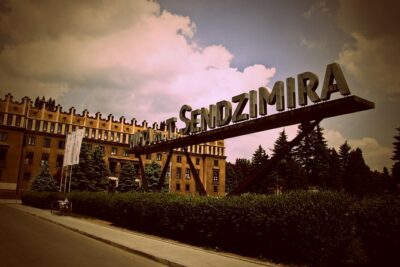
The steelworks has been known by different names over time, including the Lenin Steelworks and the Sendzimir steel mill. The tour uses the site to explain the plant’s place in communist Poland and the role of its administration. That context helps make the rooms legible: a meeting room or office is more than a relic when you understand the system it served.
The visit can include both the S and Z administration buildings. Rooms hold old furnishings and other objects, some connected with the site and some gathered into a display by the local NGO. Keep that distinction in mind. The buildings are the real draw, but not every object you see should be taken as something that stood in that exact room during the steelworks’ working years.
More communist-era tours around Krakow:
- Krakow: Nowa Huta Guided Tour in Vintage Car
★ 4.9 · 277 reviews - Legendary Private Nowa Huta Communism Tour with Crazy Guides
★ 5.0 · 262 reviews - Nowa Huta: Steelworks Administration Buildings/Shelters Tour
★ 4.9 · 160 reviews
The shelter beneath the offices
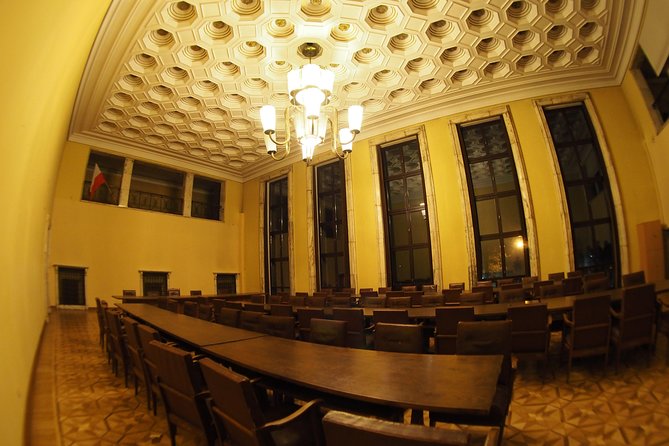
The underground Cold War shelter is a major reason to choose this tour over a walk around Nowa Huta’s architecture alone. It gives the visit a second scale: above ground, you see the workplace and its offices; below ground, you enter a space built for a period when civil defense was part of the public imagination.
You can expect to walk through tunnels and bunker areas as part of the visit. The shelter makes the history feel physical. Rather than hearing only about political tension, you move through a place designed for a possible emergency.
The route includes more than the offices and shelter. The tour’s highlights also include a worker’s theater and recordings from the steelworks’ radio station. Historic tapes are an unusual touch: they let you hear a voice from the workplace’s own media world rather than relying only on a guide’s account.
Do keep your expectations practical. The experience is an exploration of historic interiors, not a restored Cold War attraction with modern effects. The buildings are aging, and parts of the visit may feel rough around the edges. For visitors who enjoy industrial sites and preserved spaces, that can be a strength. If you prefer finished exhibits and clear labels at every turn, it may feel less orderly.
A guide who connects the plant to local life
The guide matters here. The buildings have stories to tell, but many of their details need explanation: why rooms were designed as they were, how the plant functioned, and how the district’s life shifted over the decades. A strong guide turns what might otherwise look like a set of empty offices into a place with purpose.
Mateusz is a guide name associated with this experience. He has been described as bringing a personal connection to the steelworks through family ties, along with detailed knowledge of the plant’s history. That connection can add a useful human scale to a subject that might otherwise become a string of dates and political labels.
Guides are also praised for being enthusiastic without overwhelming the group. That balance matters. You want enough context to understand the architecture and the history, but not a lecture that crowds out the chance to look around. The tour is offered in English, and the group cap of 15 helps keep the conversation at a manageable scale.
One point worth keeping in mind is that historical interpretation can be debated. An explanation that attributes every difference between workers’ and administrators’ spaces to communism may feel too simple without comparisons to workplaces elsewhere. If you like to test a guide’s framing against your own knowledge, this visit gives you material to think about rather than a final word on the subject.
What the 90 minutes to two hours include
The tour begins and ends at Ujastek 1 in Kraków. The visit is listed as lasting between about 90 minutes and two hours, with the site portion described as two hours. Plan for the longer end of that range so you are not rushing off to a tightly timed commitment afterward.
The main focus is the steelworks’ administration buildings, their offices and the underground shelter. The broader highlights include the worker’s theater and recordings from the factory radio station. The mix keeps the visit from being only a walk through empty rooms: you get architecture, industrial history, civil defense and traces of workplace culture.
There is no hotel pickup or drop-off, so you need to make your own way to the meeting point. The meeting and end point are both given as Ujastek 1, with the location note indicating the opposite side of the street. Check the precise meeting spot before setting out, especially if you are using a map pin.
The tour is near public transportation, but no specific route or travel time is provided. You should also be ready for a walk through the buildings and shelter. The stated fitness requirement is moderate, so this is not the best choice if stairs or uneven interiors are a serious concern.
Other tours around Krakow worth your time
- From Krakow: Auschwitz-Birkenau Guided Tour & Hotel Pickup
★ 4.5 · 33,358 reviews - From Krakow: Auschwitz-Birkenau Guided Tour & Hotel Pickup
★ 4.5 · 29,340 reviews - Krakow: Auschwitz Guided Tour with Optional Hotel Pickup
★ 4.5 · 15,280 reviews - Krakow–Zakopane: Cable Car, Chocholow Baths, Cheese & Vodka
★ 5.0 · 10,720 reviews
Is $27.63 good value?
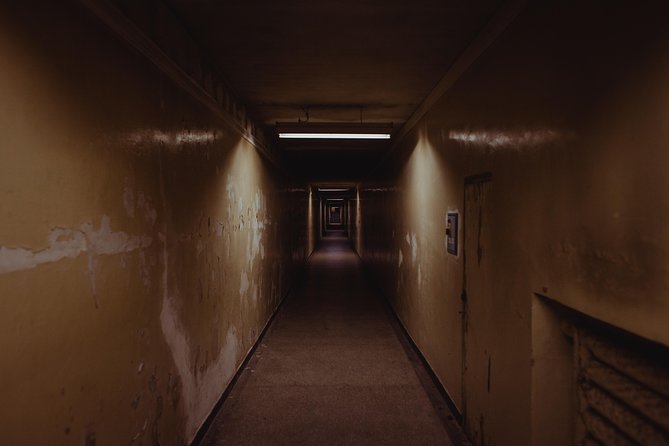
At $27.63 per person, this is a fair price for a guided visit that includes access to several parts of a former industrial complex and an underground shelter. The value comes from entry into spaces that are not simply part of a standard street walk, plus a guide who can explain what you are seeing. You also get a compact visit, not a full-day commitment.
The price does not include souvenir photos or transport to and from your hotel. Those omissions are worth noting, but neither changes the core experience: the tour is about being inside the buildings and understanding their history. Group discounts are available, which may help if you are booking with others.
The group limit of 15 is another practical advantage. In a building with offices, corridors and a shelter, a smaller group makes it easier to hear the guide and take in details without feeling packed into each room. It also leaves more room for questions than a large coach tour usually would.
Who will get the most from this visit?
I would put this tour high on the list if you are interested in communist-era Poland, Socialist Realist architecture, industrial history or abandoned buildings. It is especially appealing if you enjoy seeing the spaces behind a city’s public story: not just the grand architecture, but the offices and systems that supported a major workplace.
It can also suit someone who has already seen Kraków’s better-known historic sights and wants a different side of the city. Nowa Huta offers a distinct angle on the region’s recent past, and the steelworks buildings make that history tangible. For a repeat visit to Kraków, the unusual access can make this a worthwhile change of pace.
Families can attend, but children must be accompanied by an adult. The tour’s subject and setting may suit older children more than very young ones, though the booking information does not set a minimum age. Use your judgment about whether your child will enjoy a history-focused walk through offices and a shelter.
You may want to skip it if you need a polished, highly interactive museum visit, or if an hour and a half to two hours of guided history sounds like too much. The buildings are not presented as a fully restored attraction, and the displays include objects gathered by the NGO, not necessarily items originally used in each room.
A few practical points before you go
The tour is offered in English, and confirmation is provided at booking. It is listed as a mobile ticket, so you do not need to rely on a printed ticket. Children must be accompanied by an adult, and the maximum group size is 15.
The listed price is $27.63 per person, with group discounts available. The experience is booked, on average, 19 days ahead, which suggests it is sensible to plan rather than assume a last-minute place will be available. That is an average, not a promise about availability on any particular date.
The cancellation terms allow a full refund if you cancel at least 24 hours before the start time. Changes made less than 24 hours before the experience are not accepted, and cancellations inside that window are not refunded. The cut-off follows local time.
Should you book the Nowa Huta steelworks tour?
Book it if you want a direct, guided look at Poland’s communist past through real industrial spaces. The combination of the former offices, underground shelter, local interpretation and radio recordings gives the visit more character than a standard architecture stop. The guide’s ability to connect the plant to family and community history is a particular plus.
Think twice if you prefer restored interiors, concise visits or a polished museum format. This is an aging site, and the content is firmly historical. But if you are curious about Nowa Huta and willing to spend close to two hours listening, looking and asking questions, $27.63 buys an unusual and worthwhile perspective on Kraków beyond its old town.
FAQ
How long does the tour last?
The tour lasts about 90 minutes to two hours. The site visit is also described as taking two hours, so allow for the longer estimate when planning your day.
What is the tour price?
The listed price is $27.63 per person. Group discounts are available.
What language is the tour offered in?
The tour is offered in English.
Where does the tour start and end?
It starts and ends at Ujastek 1, 31-752 Kraków. The meeting note says the location is on the opposite side of the street, so check the precise spot before you arrive.
What is included in the price?
A local guide and a professional guide are included.
Is hotel pickup included?
No. Hotel pickup and drop-off are not included, so you need to arrange your own transport to and from the meeting point.
How large is the group?
The tour has a maximum group size of 15 people.
Can children join the tour?
Yes. Children must be accompanied by an adult.
What is the cancellation policy?
You can cancel at least 24 hours before the experience for a full refund. Cancellations or changes made less than 24 hours before the start time are not accepted for a refund or change.
Newly listed around Krakow
- Private Krakow to or from Airport Transfer★ 5.0 · 17 reviews
- Private Airport Transfer from/to Krakow Balice Airport★ 5.0 · 124 reviews
- Private Full-Day Zakopane and Thermal Baths Tour from Krakow★ 5.0 · 27 reviews
- Krakow: Polish Aviation Museum – Skip the Line Ticket★ 4.5 · 13 reviews
- Private Guided Walking Tour in Krakow Wine Bars★ 5.0 · 16 reviews
- Pierogi Cooking Class: Mastering the Art of Polish Dumplings★ 5.0 · 129 reviews
- Polish Countryside and Tyniec Abbey Bike Tour from Krakow★ 5.0 · 37 reviews
- Krakow Jewish District and Ghetto Guided Tour in a Small Group★ 5.0 · 12 reviews
Nowa Huta Tours, compared.

Legendary Private Nowa Huta Communism Tour with Crazy Guides
Read our review →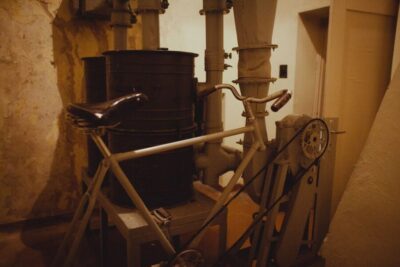
Nowa Huta: Steelworks Administration Buildings/Shelters Tour
Read our review →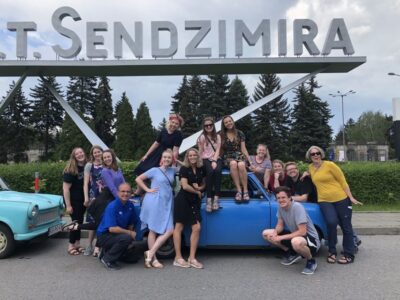
Private Nowa Huta Adventure Tour in Communist Cars
Read our review →
Communist Krakow – Nowa Huta Walking Tour in English
Read our review →
1.5h Crazy Guides’ Communism Tour of Nowa Huta in Classic Car
Read our review →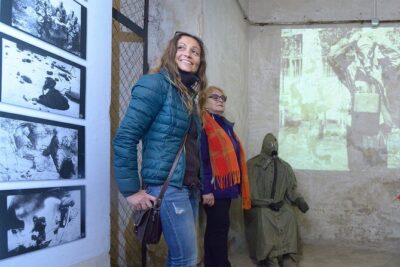
Nowa Huta Tour from Krakow: Communist City, Vodka & Zapiekanka
Read our review →Browse the lists this tour appears in