Reviewed · KRAKOW TOURS
Guided Tour of Plaszow Concentration Camp, Kraków
Plaszow is not a camp of preserved barracks and staged exhibits. It is open ground marked by memorials, cemetery traces and the places where thousands of people were imprisoned or killed. This two-hour guided walk helps you read what remains and understand what happened here.
I like two things in particular: the guide connects the camp’s physical traces to its history, and the walk makes room to stop and reflect at memorials such as the Monument of Torn-Out Hearts. The guide’s explanations and willingness to answer questions are also a clear strength. One consideration: with few buildings left, you need to be ready for an outdoor visit shaped more by memory and context than by displays.
Key points to know before you go
- Plaszow began on the grounds of two Jewish cemeteries: the camp’s history is tied directly to places of burial and remembrance.
- The walk takes in specific surviving traces: expect to see the Grey House, the ruins of the pre-burial hall, cemetery remnants and the roll-call square.
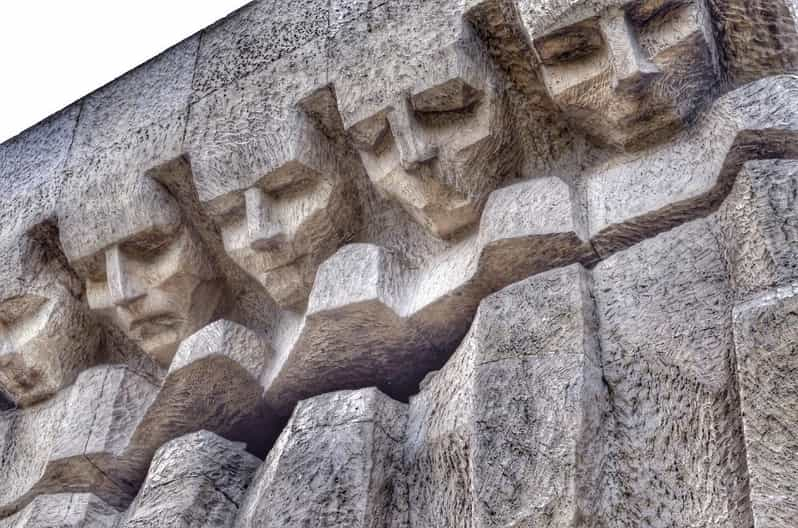
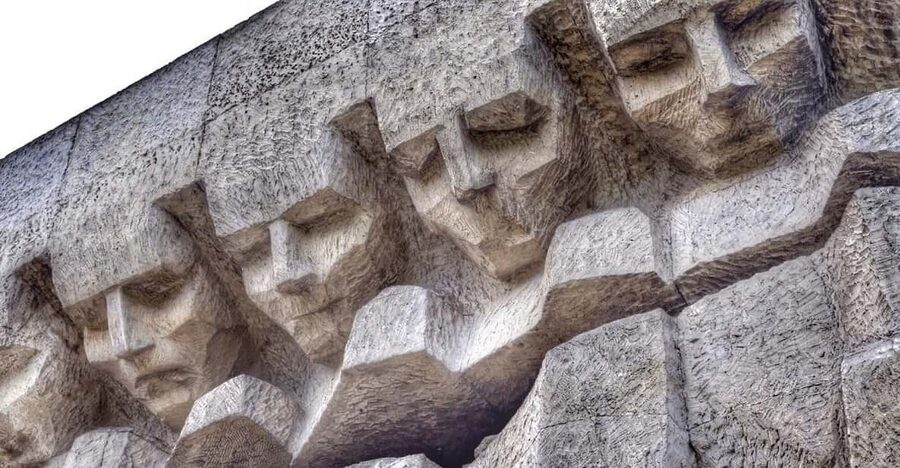
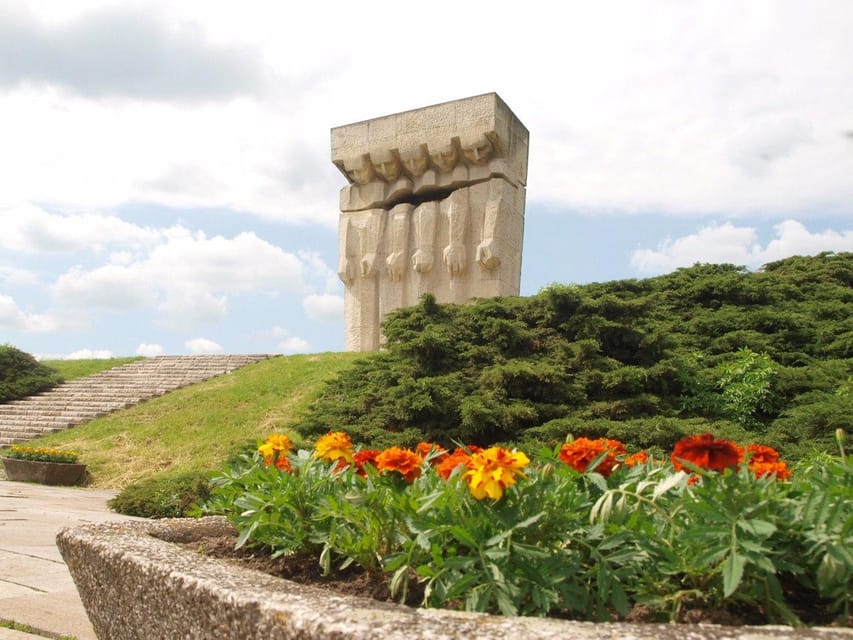
- Memorial stops are central to the visit: the Monument of Torn-Out Hearts offers a place to pause and honor the victims.
- Schindler’s story is part of Plaszow’s history: learn how work permits and a later transfer to his plant in Brünnlitz helped save more than a thousand people.
- The tour lasts two hours and costs $29 per person: a licensed guide and one tram ticket are included.
- It is a place for reflection, not a preserved camp complex: the open site has few physical remains, so a guide’s context matters.
Reading Plaszow through what remains
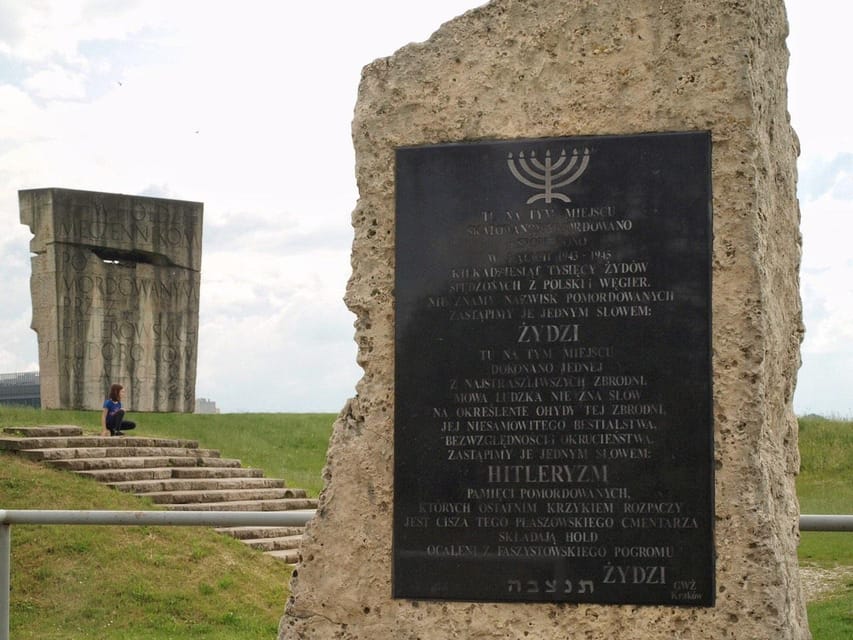
Nazi German occupiers established Plaszow in October 1942 on the grounds of two Jewish cemeteries in Kraków. It first served as a forced-labor camp for Jews from the liquidated Kraków Ghetto. From July 1943, it also held Poles in a penal-labor section. In January 1944, the camp was redesignated as a concentration camp, and later it served as a transit camp for Hungarian Jews being sent to Auschwitz.
More than 35,000 people were imprisoned at Plaszow over its existence. Around 6,000 were murdered. Executions took place at several sites within the camp, and mass graves and memorials now mark the ground.
Those facts are hard to hold in mind when the place is mostly open space. That is where the guided format earns its keep. Rather than relying on intact buildings to tell the story, your guide points out surviving features and explains how they fit into the camp’s operation. The terrain becomes a record, even where the structures themselves are gone.
Expect a serious visit. This is not a light stop between Kraków’s better-known sights, and the history calls for attention. The two-hour pace allows time for explanation and reflection, rather than turning the camp into a quick checklist.
More guided departures around Krakow:
- From Krakow: Auschwitz-Birkenau Guided Tour & Hotel Pickup
★ 4.5 · 33,358 reviews - From Krakow: Auschwitz-Birkenau Guided Tour & Hotel Pickup
★ 4.5 · 29,340 reviews - Krakow: Auschwitz Guided Tour with Optional Hotel Pickup
★ 4.5 · 15,280 reviews
The Grey House, cemeteries and roll-call square
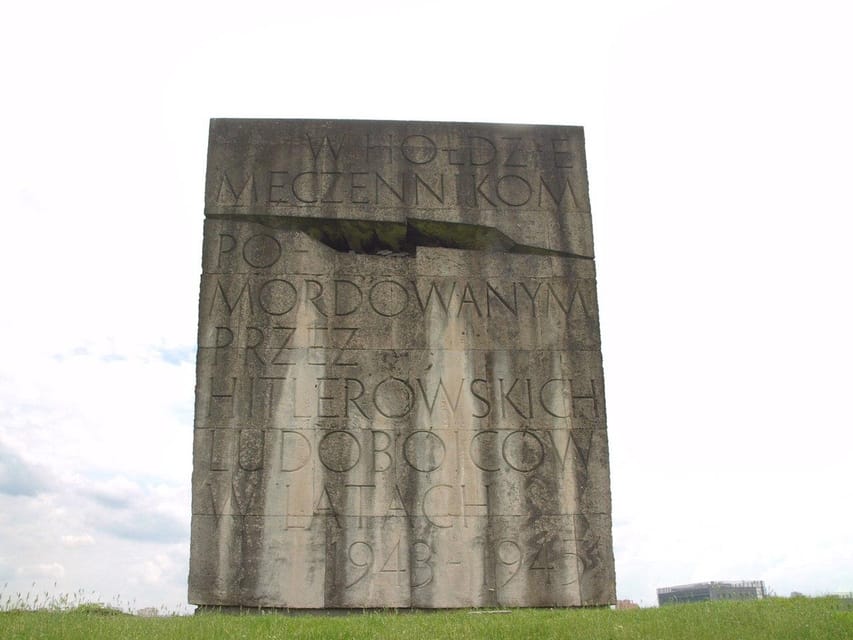
The Grey House is one of the tour’s key stops. It gives the guide a tangible point from which to explain the camp’s organization and the spaces where prisoners lived and worked. The buildings that remain are limited, so do not expect a sequence of furnished rooms or preserved interiors. The value here is in learning what the structures meant within the camp.
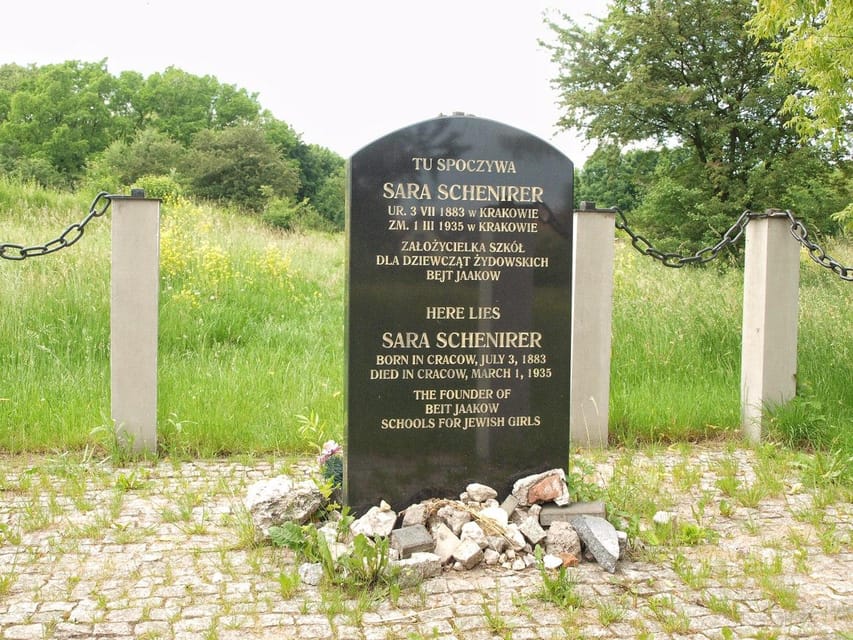
The route also takes in ruins of the pre-burial hall and traces of the Jewish cemeteries. These details matter: Plaszow was built over burial grounds, and paths were once paved with fragments of gravestones. That history makes the ground itself part of the story, not simply the setting for it.
At the roll-call square, your guide can help you understand the camp’s layout and the role of its different sections. Plaszow included living, hospital, administrative and industrial areas. Seeing how those parts related to each other gives you a clearer picture of a camp that was not just a place of imprisonment, but an organized system of forced labor and control.
The stops are best understood as pieces of a larger account. You may not find a dramatic building at every turn, and that can feel less immediately legible than a museum visit. But with a guide connecting the traces, the site’s sparse appearance becomes part of the experience: it asks you to listen, look closely and imagine the scale of what stood here.
Memorials that ask you to pause
The Monument of Torn-Out Hearts is among the major memorials on the walk. It provides a focus for remembering the people who suffered and died at Plaszow. This is not a place to rush through for a photograph and move on. The route is paced for reflection, and the memorial stops give the history time to settle.
Mass graves and other memorials also mark the ground where people were murdered. The guide’s role is especially important at these points. A name, a marker or a stretch of open ground can carry little meaning without context; a careful explanation helps you understand why the place is being remembered.
You should expect the visit to be emotionally demanding. The camp’s history is difficult, and the setting offers little distance from it. At the same time, the open space gives you room to stop and think without the visual noise of a busy indoor attraction. If you want a visit that treats the site with care, this format is well suited to that purpose.
Schindler’s connection to the camp
Oskar Schindler is closely linked to Plaszow’s story. Through his enamelware enterprise, he obtained work permits for Jewish prisoners registered through the camp. Those permits shielded them from further transports. Later, Schindler arranged for their transfer to his wartime plant in Brünnlitz, saving over a thousand lives.
The tour explains this connection as part of Plaszow’s history, rather than treating Schindler as a separate story. That context is useful if you know the name mainly through Schindler’s List. The film brought the story to a worldwide audience, and the walk also identifies locations connected with its filming.
Still, the site is not a film attraction. Its purpose is to help you understand the camp and honor its victims. The movie connection can help you place familiar scenes in context, but it should not crowd out the history of the people imprisoned here. The guide’s account of the camp’s sections, prisoners and memorials is the heart of the visit.
Other tours around Krakow worth your time
- Krakow–Zakopane: Cable Car, Chocholow Baths, Cheese & Vodka
★ 5.0 · 10,720 reviews - Krakow: Auschwitz-Birkenau Guided Tour with Pickup & Lunch
★ 4.5 · 9,800 reviews - From Krakow: Wieliczka Salt Mine Tour
★ 4.6 · 9,393 reviews - Krakow: Auschwitz-Birkenau Guided Tour Pickup/Lunch Options
★ 4.5 · 9,057 reviews
Why a guide matters at an open-air site
At Plaszow, a guide does more than lead the way. With few preserved buildings, it can be hard to tell what you are looking at or how one part of the former camp relates to another. A licensed guide provides the historical framework that lets the Grey House, cemetery traces and roll-call square make sense as parts of the same place.
The strongest feedback about this experience points to guides who explain the history in detail and take time to answer questions. One visitor described being the only person on the tour, while others praised guides for making the camp’s story clear and for being available to respond to questions. That is encouraging, but it does not guarantee a private tour or a particular guide. No guide names are provided.
If you have questions, this is a good setting to ask them. The history is complex, and hearing how the camp changed over time can help you understand why it became a forced-labor camp, a concentration camp and later a transit point. The tour is listed in English, so select English when booking if that is the language you need. Group tours operate in one language.
Is $29 fair for two hours?
At $29 per person, you are paying for a two-hour guided visit, a licensed guide and one tram ticket. The main value is not access to a large collection of preserved objects. It is the guide’s help in interpreting a site where much of the physical camp is gone.
That distinction matters when comparing this tour with other Kraków activities. If you mainly want interiors, exhibits and a self-guided museum experience, Plaszow may not meet that expectation. If you want to understand the camp’s place in Kraków’s wartime history and have the surviving features explained as you walk, the guide can make the price worthwhile.
The small number of remains is not a flaw in the tour, but it does shape what you get. You are paying for context, historical explanation and time at the memorials. The stated duration gives the visit room to breathe, though it is still a focused two-hour walk rather than a full-day study of the camp.
Practical details for a respectful visit
The activity is listed as wheelchair accessible. It takes place outdoors, among the camp’s open grounds and surviving traces, so consider that setting when deciding what works for you. The tour lasts two hours, and a single tram ticket is included.
Arrive 10 minutes before the start. Once the group has left, late arrivals cannot join and tickets cannot be refunded. You can cancel up to 24 hours in advance for a full refund, and the reserve-now, pay-later option lets you book without paying immediately.
Plan your expectations around a place of memory rather than a spectacle. There are few physical remains, and the site’s quiet, open character is a large part of the experience. Give yourself time afterward if you think you will want a pause before moving on to another activity.
Who should book this walk?
I would choose this tour if you want to understand Plaszow beyond a name on a map or a connection to Schindler’s List. It suits visitors who are willing to listen, ask questions and spend time with a difficult chapter of Kraków’s history. It is also a good choice if you prefer a guided account over trying to make sense of the remains on your own.
You may want to choose another activity if you need a highly visual visit full of preserved buildings or museum displays. Plaszow does not offer that kind of experience. Its power lies in the history attached to its open ground, the memorials and the traces that remain.
At $29, with a licensed guide and tram ticket included, this is a useful way to visit a site that can be hard to interpret alone. Book it if reflection and historical context matter more to you than dramatic ruins. If you do go, arrive on time, keep space for questions and treat the memorial stops as the central part of the walk.
FAQ
How long is the Plaszow tour?
The guided walk lasts two hours.
What language is the tour in?
The live tour guide speaks English. Group tours operate in one language, so select your preferred language when booking.
What does the $29 price include?
The price is $29 per person and includes a licensed guide and one tram ticket.
Which places does the walk visit?
The tour takes in the Grey House, ruins of the pre-burial hall, traces of the Jewish cemeteries, the roll-call square and major memorials, including the Monument of Torn-Out Hearts.
Is the tour wheelchair accessible?
Yes. The activity is listed as wheelchair accessible.
How early should I arrive?
Arrive 10 minutes before the tour begins. Latecomers cannot join once the group has departed, and their tickets cannot be refunded.
Can I cancel the booking?
Yes. You can cancel up to 24 hours in advance for a full refund.
Newly listed around Krakow
- Private Krakow to or from Airport Transfer★ 5.0 · 17 reviews
- Private Airport Transfer from/to Krakow Balice Airport★ 5.0 · 124 reviews
- Private Full-Day Zakopane and Thermal Baths Tour from Krakow★ 5.0 · 27 reviews
- Krakow: Polish Aviation Museum – Skip the Line Ticket★ 4.5 · 13 reviews
- Private Guided Walking Tour in Krakow Wine Bars★ 5.0 · 16 reviews
- Pierogi Cooking Class: Mastering the Art of Polish Dumplings★ 5.0 · 129 reviews
- Polish Countryside and Tyniec Abbey Bike Tour from Krakow★ 5.0 · 37 reviews
- Krakow Jewish District and Ghetto Guided Tour in a Small Group★ 5.0 · 12 reviews
Krakow Tours, compared.
Auschwitz-Birkenau Guided Tour & Hotel Pickup
Read our review →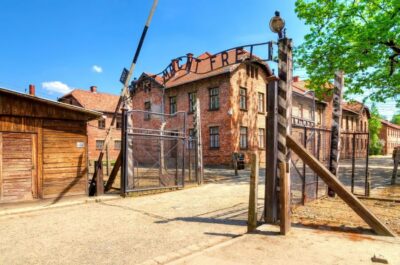
Auschwitz Guided Tour with Optional Hotel Pickup
Read our review →
Zakopane: Cable Car, Chocholow Baths, Cheese & Vodka
Read our review →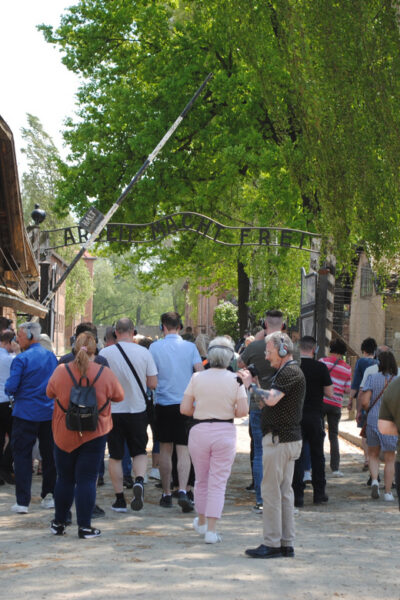
Auschwitz-Birkenau Guided Tour with Pickup & Lunch
Read our review →
Krakow to Auschwitz Birkenau Guided Tour with Transfer and Ticket
Read our review →