
Reviewed · KRAKOW WALKING TOURS
Krakow: Plaszow Concentration Camp Guided Walking Tour
Płaszów is hard to read at first: much of the camp is gone, and the place does not look like the scenes many people remember from Schindler’s List. A guide helps you piece it together, connecting the former camp’s surviving traces to the lives and deaths of the people imprisoned there.
Two things I like about this tour are its route from Ghetto Heroes Square to Płaszów, which gives the camp’s story a wider Kraków setting, and its use of photographs and on-site details to make a changed place easier to understand. The main consideration is the subject matter: this is a sobering visit, and the walk calls for moderate fitness and comfortable shoes.
Key points to know before you book
- Start at Ghetto Heroes Square: The tour begins at Apteka pod Orłem, beside the square that served as a key point in the Kraków ghetto.
- See what remains at Płaszów: The guide connects the Grey House, cemetery traces, the roll-call square, memorials, and other surviving features.
- Get historical context, not just film context: The tour covers the camp’s changing role and Oskar Schindler’s efforts to protect prisoners.
- Plan for a serious two hours: The tour is emotionally demanding and includes substantial walking.
- Small group, English option: Group size is capped at 25, and each group tour runs in one selected language.
- Know your timing: Arrive 10 minutes early. The tour cannot be joined after the group leaves.
Start at the square that marked the ghetto’s daily reality
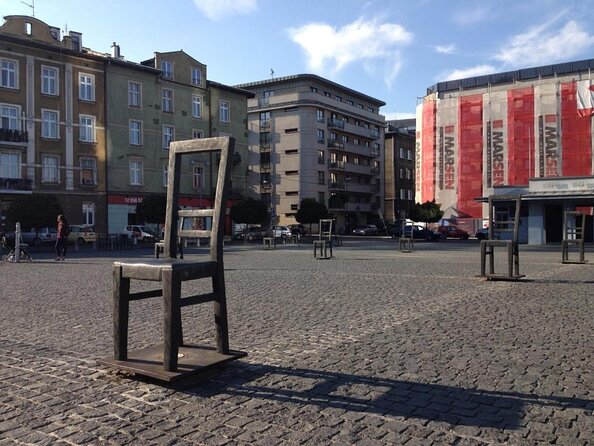
The meeting point is Apteka pod Orłem at Plac Bohaterów Getta 18, beside Ghetto Heroes Square. During the German occupation, the square was called Plac Zgody. It served as a place of control and registration, and as a departure point for transports from the Kraków ghetto. After the war, its name was changed to remember the ghetto’s victims.
Beginning here is more than a convenient way to gather the group. It gives the visit a human and urban frame before you reach the former camp. Płaszów was tied to the forced removal and imprisonment of Kraków’s Jewish population, so understanding the ghetto’s role helps explain why the camp was established and who was sent there.
The first stop lasts about 15 minutes. Expect an introduction to the square and its place in the history of the ghetto, rather than a long, separate visit. The admission ticket is free, and there is no charge to enter the square.
The tour’s starting point is useful if you want a guide to connect separate places into one account. You will not begin with Płaszów as an isolated site. Instead, you start where control and deportation shaped the lives of people who would later be imprisoned at the camp.
More walking tours around Krakow:
- Old Town Krakow & Wawel Castle Walking Tour
★ 5.0 · 1,508 reviews - Creepy Krakow: 2-Hour City Walking Tour
★ 4.7 · 1,131 reviews - Krakow: The Old Town Walking Tour
★ 4.8 · 794 reviews
Reading Płaszów through what survives
Płaszów was established by the Nazi German occupiers in October 1942 on the grounds of two Jewish cemeteries. It first operated as a forced-labor camp for Jews from the liquidated Kraków ghetto. From July 1943, it also held Poles in a penal-labor section. In January 1944, it was redesignated as a concentration camp. Later that year, it also served as a transit camp for Hungarian Jews sent onward to Auschwitz.
More than 35,000 people were imprisoned at Płaszów over the camp’s existence, and around 6,000 were murdered. Executions took place at several sites. Today, mass graves and memorials mark parts of the area, but the camp’s former buildings and structures do not survive as a complete, clearly readable complex.
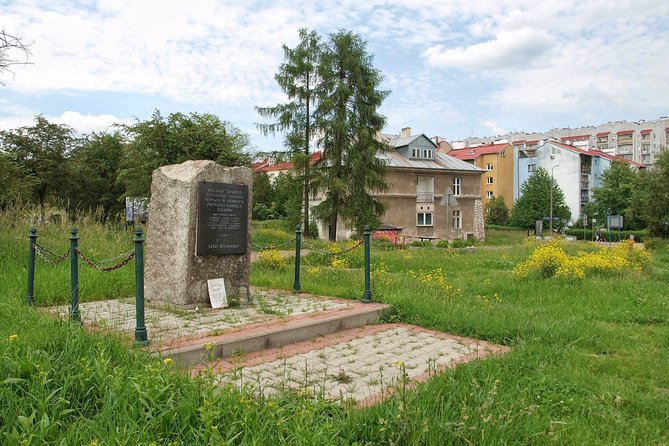
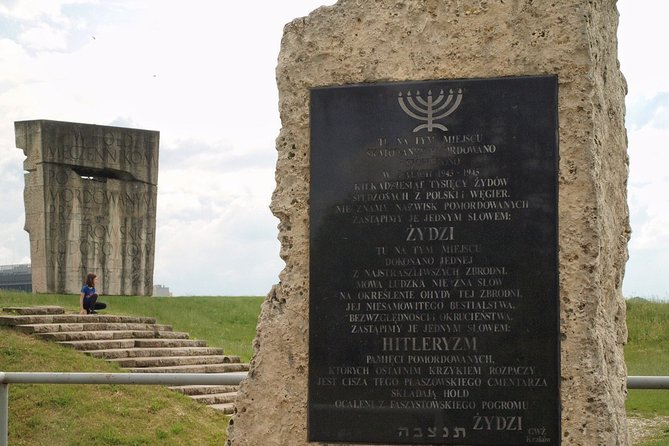
That absence is one of the reasons a guided walk is valuable here. The guide helps you imagine the camp’s layout without pretending that the present-day site offers a full picture. You are shown features such as the Grey House, the ruins of the pre-burial hall, traces of the Jewish cemeteries, and the roll-call square. Paths also preserve evidence of how fragments of gravestones were used to pave roads.
The camp visit is scheduled for about an hour, followed by another 45 minutes focused on its organization, memorials, and related history. On the ground, the guide’s explanations are central. One person who joined the tour described being shown photographs of Płaszów as it once looked, a useful way to compare the present remains with the camp that stood here.
This is not a visit where every stop has an intact building or display to explain itself. You may find it harder to orient yourself than at a preserved museum site. The guide’s work is to supply the context: which areas served living, hospital, administrative, and industrial functions, and how surviving traces relate to those former sections.
The memorials and the cost of looking closely
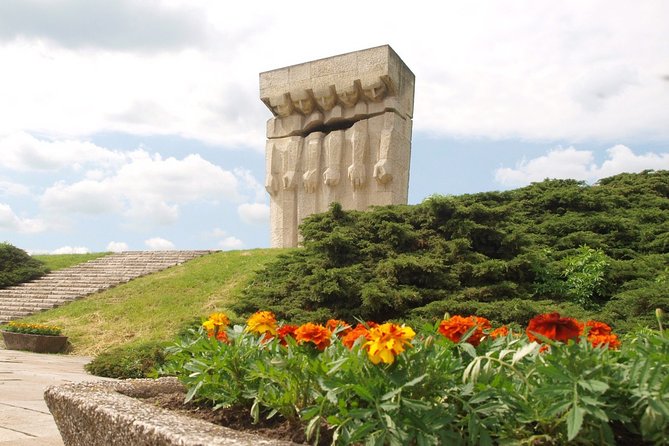
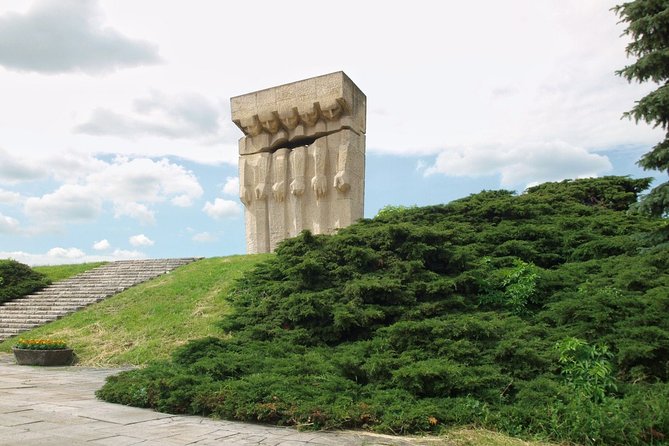
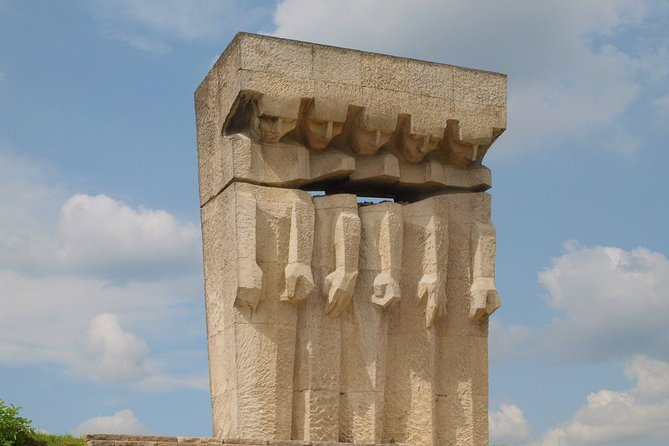
The Monument of Torn-Out Hearts is among the major memorials on the route. The guide pauses at memorial sites and explains their place in the camp’s history. At Płaszów, that pause matters. The remains can feel sparse, while the numbers of prisoners and murdered people are difficult to take in. A memorial gives you a defined place to stop and reflect.
The route also brings you near sites connected to executions and mass graves. The available details do not specify every location visited, so do not expect a precise stop-by-stop list of all execution sites. What you can expect is an account of how violence took place across the camp and why memorials now mark parts of the site.
I would not treat this as a casual stroll or a quick photo stop. The subject is severe, and the physical place may feel quiet and open compared with its history. That contrast can be unsettling. If you need time to process what you hear, give yourself room after the tour rather than stacking it tightly between lighter activities.
Schindler’s story in its proper setting
Oskar Schindler is an essential part of Płaszów’s history, but the tour places his actions within the larger system of imprisonment and forced labor. Through his enamelware business, Schindler sought work permits for Jewish prisoners registered through Płaszów. Those permits helped shield them from further transports. Later, he arranged their transfer to his wartime plant in Brünnlitz, saving more than a thousand lives.
If you know the story mainly from Schindler’s List, the visit can help you understand how the film relates to actual places and events. One guide-led account connected the film’s story to the sites around Płaszów and added information beyond what appears on screen. That is a useful way to approach the film: as a doorway into history, not as the whole history.
Some locations associated with the film are part of the tour’s appeal, but the focus is broader than film scenery. The camp’s origins, functions, sections, and victims take priority. That balance is important. Płaszów should not be reduced to the story of one rescuer, even as Schindler’s actions remain a major part of what happened there.
More guided departures around Krakow:
- From Krakow: Auschwitz-Birkenau Guided Tour & Hotel Pickup
★ 4.5 · 33,358 reviews - From Krakow: Auschwitz-Birkenau Guided Tour & Hotel Pickup
★ 4.5 · 29,340 reviews - Krakow: Auschwitz Guided Tour with Optional Hotel Pickup
★ 4.5 · 15,280 reviews - Krakow: Auschwitz-Birkenau Guided Tour with Pickup & Lunch
★ 4.5 · 9,800 reviews
A guide makes the difference at a changed site
A good guide matters especially at Płaszów because the physical remains are incomplete. The strongest parts of this format are the explanations tied to specific features, the use of historic photographs, and the chance to ask questions as you walk. The guide is not simply naming buildings. They are helping you link traces on the ground to the camp’s organization and changing role.
Guides on past departures have included Bartholomew, Barbara, and Phil. Their names are not a guarantee of who will lead your date, but the accounts describe guides who took time to explain the sites, answer questions, and keep the history clear. The subject calls for care and accuracy, and an engaging guide can help make difficult facts easier to follow without making the visit feel glib.
The group limit is 25 people. That is small enough to make listening and asking questions more practical than in a large coach group, though it is not a private tour. Each group tour is conducted in one language, and English is offered. Choose your preferred language when booking.
What the two-hour route asks of you
The experience lasts about two hours, with approximately 15 minutes at Ghetto Heroes Square, an hour at the camp, and a further 45 minutes for the camp’s memorials, layout, and Schindler’s connection. The stated sections add up to the full tour time. The walk begins at Plac Bohaterów Getta 18 and ends at the bus stop at Henryka Kamieńskiego 57.
The title calls this a walking tour, and you should be ready to walk across the site. Moderate physical fitness is recommended. Comfortable shoes are sensible: the camp area involves enough walking that footwear will affect your comfort. The information provided does not specify the exact walking distance or surface conditions, so ask the operator if those details matter for your plans.
One account describes taking a tram from Ghetto Heroes Square toward Płaszów, but transport arrangements are not specified as a standard feature. Do not assume a tram ride is included. If you want to know how the group gets from the square to the camp on your chosen departure, confirm that detail with the operator before booking.
Arrive at least 10 minutes before the start time. Once the group has left, late arrivals cannot join, and the ticket is not refundable. This is a strict rule, so allow time to reach the pharmacy meeting point without rushing.
Is $30.04 good value?
At $30.04 per person, the price buys a two-hour guided walk with an English-language option and a maximum group size of 25. Admission to the stops is listed as free, so the value is not in a paid entry ticket. It is in having someone explain a site whose former buildings are mostly absent and whose history is difficult to reconstruct from remains alone.
That makes the tour most worthwhile if you want historical context, not simply a walk around the area. Photographs, explanations of camp sections, and the connection between the ghetto and Płaszów all help turn scattered traces into a clearer account. If you already know the history and prefer to explore without a guide, you may find a guided tour less essential. But the site’s incomplete remains make an informed guide a strong advantage for a first visit.
The tour is booked, on average, 39 days ahead. That is a planning clue, not a rule that you must book that early. Free cancellation is available up to 24 hours before the start time for a full refund. Changes made less than 24 hours before the start are not accepted, and cancellations inside that window are not refunded.
Who should book this walk?
Book it if you want a serious, guided account of the Kraków ghetto and Płaszów, or if Schindler’s List has led you to seek out the history behind the film. It is also a good fit if you learn best when someone points out details on site and explains how the camp was arranged.
Think carefully if you are short on time, uncomfortable with emotionally difficult material, or unable to manage a moderate amount of walking. This is not a light sightseeing stop. If you do go, bring comfortable shoes, arrive early, and give yourself a little breathing room afterward.
FAQ
How long is the tour?
The tour lasts approximately two hours.
Where does the tour start?
It starts at Apteka pod Orłem, Plac Bohaterów Getta 18, Kraków.
Where does the tour end?
It ends at the bus stop at Henryka Kamieńskiego 57.
Is the tour offered in English?
Yes. English is offered. Group tours are conducted in one language, so select your preferred language when booking.
How large is the group?
The maximum group size is 25 people.
How much walking should I expect?
It is a walking tour, and a moderate level of physical fitness is recommended. Comfortable shoes are advised.
How early should I arrive?
Arrive 10 minutes before the tour begins. Late arrivals cannot join after the group has departed, and tickets cannot be refunded.
Does the tour include admission fees?
Admission tickets for the listed stops are free.
What is the cancellation policy?
You can cancel up to 24 hours before the experience starts for a full refund. Cancellations or changes made less than 24 hours before the start are not accepted for a refund.
Newly listed around Krakow
- Private Krakow to or from Airport Transfer★ 5.0 · 17 reviews
- Private Airport Transfer from/to Krakow Balice Airport★ 5.0 · 124 reviews
- Private Full-Day Zakopane and Thermal Baths Tour from Krakow★ 5.0 · 27 reviews
- Krakow: Polish Aviation Museum – Skip the Line Ticket★ 4.5 · 13 reviews
- Private Guided Walking Tour in Krakow Wine Bars★ 5.0 · 16 reviews
- Pierogi Cooking Class: Mastering the Art of Polish Dumplings★ 5.0 · 129 reviews
- Polish Countryside and Tyniec Abbey Bike Tour from Krakow★ 5.0 · 37 reviews
- Krakow Jewish District and Ghetto Guided Tour in a Small Group★ 5.0 · 12 reviews
Krakow Walking Tours, compared.

Browse the lists this tour appears in