
Reviewed · KRAKOW JEWISH QUARTER TOURS
Krakow Kazimierz and Jewish Ghetto Tour with Synagogues
Krakow’s Jewish story comes into focus on foot, from the old streets of Kazimierz to the ghetto memorial at Plac Bohaterów Getta. I like two things in particular: the private format, which gives you room to ask questions, and the chance to connect solemn memorials with living neighborhood life, including synagogues, cafés, and New Square.
One consideration: the tour’s length changes what you can see inside. The two-hour option does not include synagogue entry, while the four-hour version adds Remuh Synagogue and the Old Jewish Cemetery. Also, sites can close on Saturdays, Jewish holidays, and during prayer, so check the schedule before booking.
Key points to know before you book
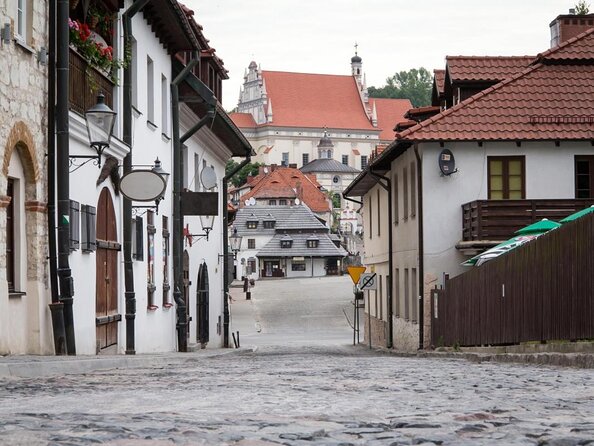
- Kazimierz tells more than one story: It was a center of Polish Jewish life for centuries and is now a lively neighborhood.
- Plac Bohaterów Getta is a powerful pause: Empty chairs mark the square in memory of the Krakow Ghetto’s victims.
- Synagogue access depends on tour length: The three-hour tour includes either Tempel Synagogue or the Old Synagogue; the four-hour option adds Remuh Synagogue.
- The private format suits curious questions: Only your party joins, and the guide can adapt the experience to your interests and the sites’ opening hours.
- Schindler’s Factory is not a standard museum visit: It may be entered by request, and admission is not included.
- Book with the calendar in mind: Jewish heritage sites close on Saturdays, Jewish holidays, and during prayer times.
From Kazimierz’s Jewish past to its present
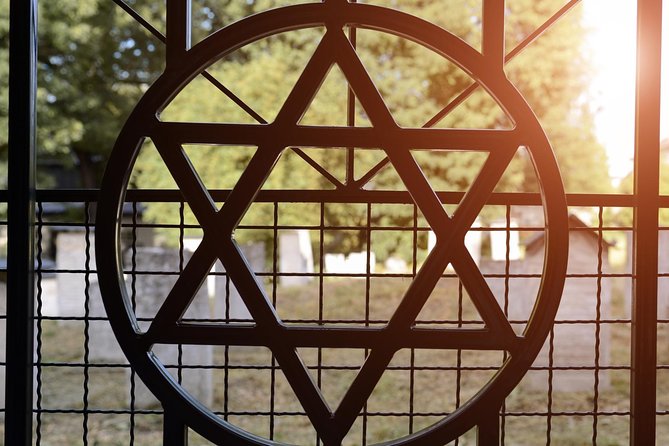
Kazimierz was the main center of Krakow’s Jewish community for centuries. A sizable population moved here at the end of the fifteenth century, and the quarter’s synagogues and streets still make that history tangible. On this tour, you begin in a district that is both a heritage site and a functioning part of the city.
That contrast is worth paying attention to. Kazimierz is now known for its food and social life, especially around New Square, but the tour helps you look beyond the present-day cafés and busy corners. Your guide can put the neighborhood’s buildings and public spaces into context, so the old quarter feels less like a pretty backdrop and more like a place shaped by generations of Jewish life.
The experience is private, which is a real advantage for a subject that can be hard to take in quickly. You can ask for clarification, pause over a detail, or focus more closely on a particular period. A guide named Helena is associated with the tour; her approach has been described as combining careful historical explanation with stories of resilience and strength. Guide assignments may vary, so don’t assume you will have her.
More Jewish heritage tours around Krakow:
- Krakow: Schindler’s Factory & Ghetto Guided Tour
★ 4.7 · 1,694 reviews - Krakow: Jewish Quarter and Former Ghetto Tour
★ 4.9 · 1,441 reviews - Krakow: Bike Tour of Old Town, Jewish Quarter and the Ghetto
★ 4.9 · 1,155 reviews
Synagogues, from Old Synagogue to Tempel
The synagogue visits are among the tour’s most rewarding possibilities, but what you enter depends on the option you book and the day’s opening hours. The Old Synagogue is one of two surviving Gothic synagogues in the world, with the other in Prague. Restored after World War II, it now houses a Jewish Museum. Its significance is not only architectural: the building links Krakow’s present-day streets to the Jewish community that once gathered there.
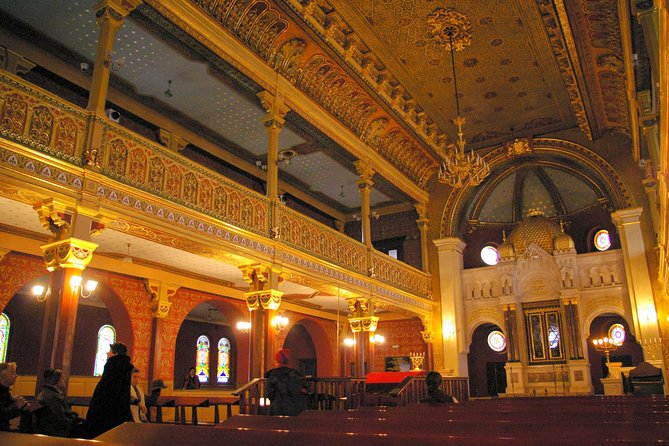
Tempel Synagogue offers a different impression. It is described as small but striking inside, with stained glass, gold detailing, and an ornate interior. The three-hour tour includes entry to either Tempel Synagogue or the Old Synagogue. Which one you visit depends on your preferences and opening hours, so make your interests clear when arranging the tour.
The four-hour option includes two synagogue visits: Remuh Synagogue and either Tempel or the Old Synagogue. Remuh is a small Renaissance synagogue dating to about 1557, named for Moses Isserles, a writer and philosopher also known as Rabbi Remu’h. It still holds regular services for Krakow’s small Jewish community. If you want to see how Jewish heritage sites function as more than historical exhibits, this is a particularly meaningful stop.
There are limits. The Old Synagogue is open Mondays from 10 a.m. to 2 p.m., and Tuesday through Sunday from 10 a.m. to 5 p.m. Tempel’s hours vary by season and day: it is generally open Monday through Thursday and Sunday, with shorter Friday hours. Both can be closed on Saturdays, Jewish holidays, or during prayer. Confirm the plan ahead of time rather than assuming that every interior will be available.
Remuh and the Old Jewish Cemetery
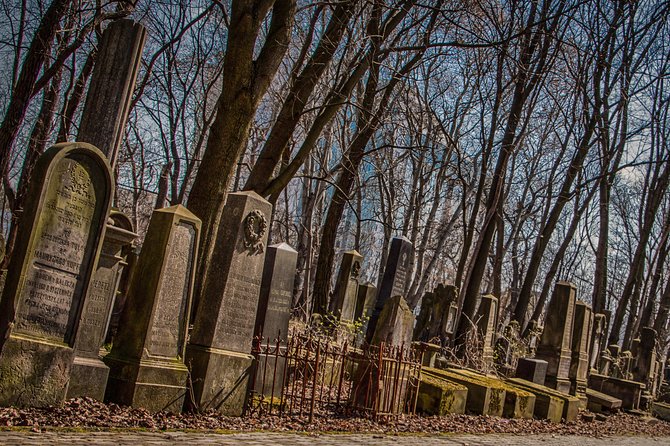
The four-hour option gives you time for Remuh Synagogue and the Old Jewish Cemetery. This is the most substantial version of the tour for anyone who wants more than an overview. The cemetery is included with the Remuh visit, and the hour allotted to the stop allows for a slower, more reflective pace than a brief street-side explanation.
Cemeteries make history personal in a way that dates and building styles cannot. The Old Jewish Cemetery offers a quiet setting to consider the lives and traditions represented there. It is a place to move respectfully and give yourself time to look, rather than treating it as another item to tick off.
The itinerary also names a New Jewish Cemetery, but the included cemetery access specified for the four-hour option is the Old Jewish Cemetery. If seeing a particular burial ground matters to you, confirm the exact route and admission with the operator before booking. The listed stops are not all guaranteed on every option.
Crossing into the former ghetto
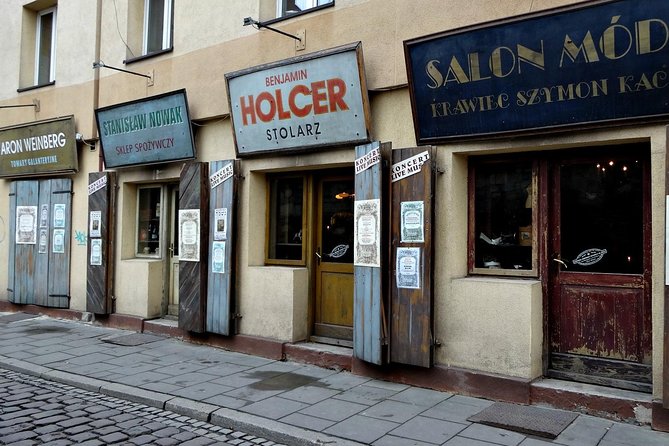
The tour links Kazimierz with Podgórze, where the former Jewish Ghetto was established during the Nazi occupation. Plac Bohaterów Getta, also called Ghetto Heroes Square, is a central stop. Its empty chairs form a memorial to the people forced into the ghetto and deported from it. The chairs make a stark impression without needing elaborate explanation.
The former ghetto walls provide another kind of encounter. Sections of the old walls remain, offering a direct reminder of how Jewish residents were confined. These are not grand ruins, and that is part of their force: they are fragments of an ordinary urban boundary that became part of a system of persecution.
A bridge over the Vistula connects Kazimierz and Podgórze. It is known for the padlocks attached by people from around the world, a more contemporary sight on a route that otherwise carries heavy historical weight. The contrast can feel abrupt, but it also shows how the city’s spaces hold different layers of memory and daily life side by side.
Other tours around Krakow worth your time
- From Krakow: Auschwitz-Birkenau Guided Tour & Hotel Pickup
★ 4.5 · 33,358 reviews - From Krakow: Auschwitz-Birkenau Guided Tour & Hotel Pickup
★ 4.5 · 29,340 reviews - Krakow: Auschwitz Guided Tour with Optional Hotel Pickup
★ 4.5 · 15,280 reviews - Krakow–Zakopane: Cable Car, Chocholow Baths, Cheese & Vodka
★ 5.0 · 10,720 reviews
Schindler’s Factory and film locations
The former administrative building of Oskar Schindler’s Enamel Factory now houses the exhibition Kraków under Nazi Occupation 1939–1945. The tour includes a short stop outside, but entry is not part of the standard admission. It may be possible by request, so ask in advance if the exhibition is a priority. A ten-minute exterior stop is not a substitute for visiting the museum.
The route also includes locations associated with Schindler’s List, including the site of one of the film’s most disturbing scenes. These places can help you connect the city’s streets with a story many people know from film. Still, the tour’s value is broader than movie recognition: the guide can help keep the focus on the people and events behind the cinematic version.
New Square, Jan Karski, and the living quarter
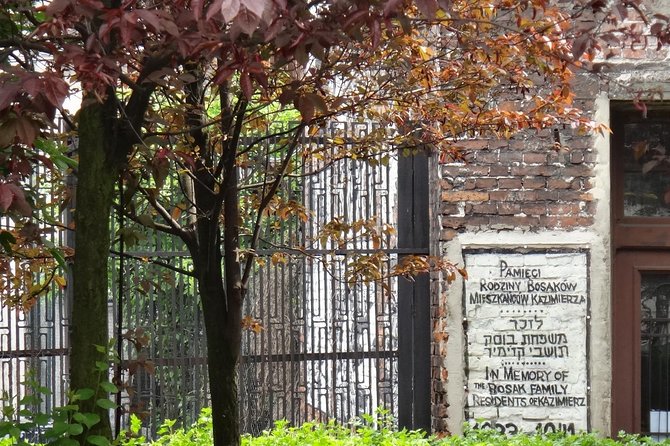
Not every stop is a memorial or a synagogue. New Square is one of Kazimierz’s best-known gathering places, with food, local life, and an easygoing atmosphere. It gives you a chance to see the neighborhood as it is now, not only as a setting for its past.
The statue of Jan Karski offers a quieter point of reflection. Karski is shown seated on a bench made from the same metal as the figure, so you can sit beside him. The simple design invites a pause and offers a personal counterpoint to the larger memorials.
These stops matter because a tour of Jewish Krakow should not leave you with the impression that the quarter is only a museum. The route moves between loss, religious life, public memory, and everyday activity. That range is one of the strongest reasons to take a guided walk rather than simply collecting addresses on a map.
Choosing the two, three, or four-hour tour
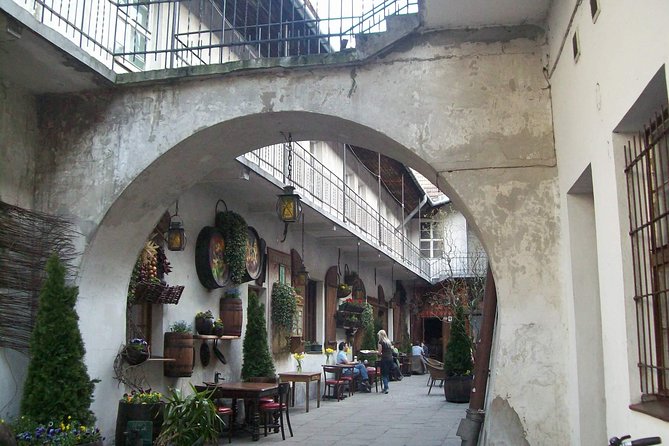
The two-hour option is the most compact introduction. It includes a private guide and an overview of Kazimierz and the former ghetto, but synagogue tickets are not included. Choose it if you have limited time or mainly want a guided orientation to the district and memorial sites.
The three-hour tour adds entry to one synagogue, either Tempel or the Old Synagogue. For many people, this is the best balance: enough time to see an interior while keeping the outing to a manageable half-day activity. The exact choice depends on opening hours and your preferences.
The four-hour option is the fullest version. It includes Remuh Synagogue, the Old Jewish Cemetery, and either Tempel or the Old Synagogue. You pay with more time and a higher likely total cost, but you get the most substantial look at the religious and commemorative sites. If Jewish heritage is a main reason for your visit to Krakow, this is the option I would consider first.
The listed price is $97.21 per person, and group discounts are offered. Because the tour is private, the value depends partly on how many people are in your party and which duration you choose. The price covers a licensed, five-star guide fluent in the language selected at booking; included admission varies by option. Compare the total cost for your group, not just the per-person figure, and check which synagogue and cemetery tickets are actually included.
Practical details that affect your day
The meeting point is Hotel Kazimierz at I Miodowa 16, and the tour ends back there. It lasts about two to four hours, depending on your selection. The experience is a walking tour, so wear shoes you are comfortable in and allow enough time afterward if you plan to visit Schindler’s Factory or another museum independently.
The tour is booked, on average, 26 days ahead. That is a useful planning clue, especially if you want a specific date or the longer option. Your booking confirmation arrives at the time of purchase, and you should check your email the day before for important updates.
The tour is private, so only your group participates. It is near public transportation, service animals are allowed, and most people can take part. Free cancellation is available up to 24 hours before the start time; changes or cancellations inside that period are not accepted and do not qualify for a refund.
Should you book this Krakow Jewish history tour?
Book it if you want a guide to connect Kazimierz’s synagogues and streets with the former ghetto, and you value time for questions over a large group’s fixed script. The four-hour version is the strongest choice for a serious visit, while the three-hour option offers a good middle ground with one synagogue interior.
Skip or shorten it if you mainly want to enter Schindler’s Factory, since that museum visit is not included and must be requested separately. Above all, check synagogue hours and closure days before you commit. With that planning, this private walk offers a thoughtful way to understand both the losses and the continuing life of Krakow’s Jewish community.
FAQ
How long is the tour?
The tour lasts approximately two to four hours. The duration depends on the option you select.
Is the tour private?
Yes. Only your group participates.
Are synagogue tickets included?
Tickets depend on the option. The two-hour tour does not include synagogue admission. The three-hour tour includes either Tempel Synagogue or the Old Synagogue, and the four-hour tour includes Remuh Synagogue plus either Tempel or the Old Synagogue.
Is the Old Jewish Cemetery included?
Admission to the Old Jewish Cemetery is included with the four-hour option. It is not included with the two- or three-hour options.
Can I visit Schindler’s Factory during the tour?
The route includes a stop at the former factory, but museum admission is not included. Entry may be possible by request.
Where does the tour start and end?
It starts at Hotel Kazimierz, I Miodowa 16, Kraków, and ends back at the meeting point.
Are the synagogues open every day?
No. Jewish heritage sites and synagogues are closed on Saturdays, Jewish holidays, and during prayer times. Opening hours also vary by synagogue and day.
Can I cancel for a refund?
You can cancel at least 24 hours before the experience starts for a full refund. Cancellations or changes made less than 24 hours before the start time are not accepted.
Newly listed around Krakow
- Private Krakow to or from Airport Transfer★ 5.0 · 17 reviews
- Private Airport Transfer from/to Krakow Balice Airport★ 5.0 · 124 reviews
- Private Full-Day Zakopane and Thermal Baths Tour from Krakow★ 5.0 · 27 reviews
- Krakow: Polish Aviation Museum – Skip the Line Ticket★ 4.5 · 13 reviews
- Private Guided Walking Tour in Krakow Wine Bars★ 5.0 · 16 reviews
- Pierogi Cooking Class: Mastering the Art of Polish Dumplings★ 5.0 · 129 reviews
- Polish Countryside and Tyniec Abbey Bike Tour from Krakow★ 5.0 · 37 reviews
- Krakow Jewish District and Ghetto Guided Tour in a Small Group★ 5.0 · 12 reviews
Krakow Jewish Quarter Tours, compared.
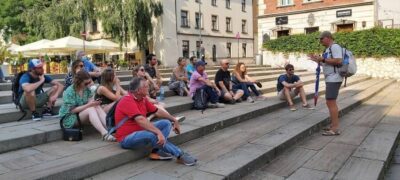
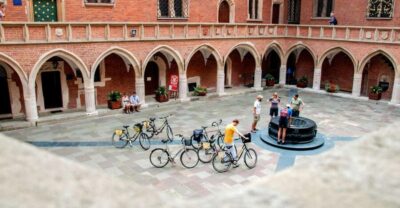
Bike Tour of Old Town, Jewish Quarter and the Ghetto
Read our review →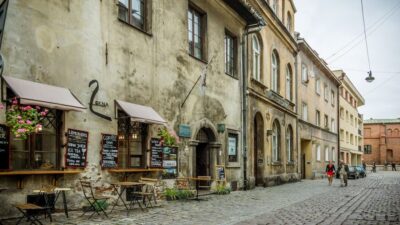
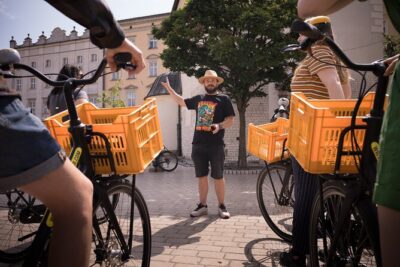
Full Bike Tour – the Old Town, Jewish Qtr & the Ghetto NEW BIKES
Read our review →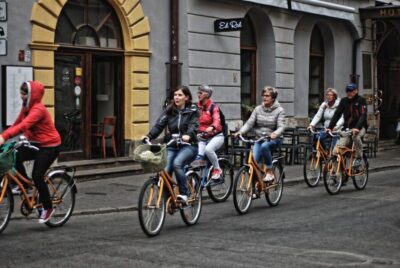
Bike Tour of the Old Town, Kazimierz, and the Ghetto
Read our review →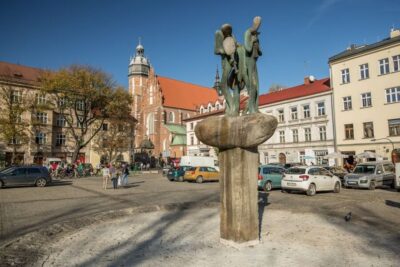

Jewish Quarter and Ghetto Electric Golf Cart Tour
Read our review →Browse the lists this tour appears in