
Reviewed · KRAKOW JEWISH QUARTER TOURS
Krakow Jewish Quarter and Ghetto Tour by Electric Golf Cart
Kazimierz was once a separate town and the center of Jewish life in Kraków. This golf-cart tour carries you through its streets and into Podgórze, where the route shifts from centuries-old community life to the stark history of the wartime ghetto.
I like two things here: you cover a wide area in about 90 minutes, and an English-speaking driver adds context to the audio guide. It is a practical way to get your bearings before returning on foot to places that catch your interest.
The trade-off is pace. The cart gives you a broad overview, not long visits inside each site, and the group can reach 50 people. If you want to linger over synagogue architecture or wander at your own speed, walking is the better fit.
Key points to know
- Kazimierz and Podgórze in one ride: The route connects the old Jewish quarter with the former ghetto across the river.
- More than 20 cultural monuments: You see a range of landmarks in a short time, though not every stop means time indoors.
- Szeroka Street’s unusual history: Four synagogues once stood along this central street.
- A moving ghetto sequence: The wall fragment, Plac Zgody and the former Polish pharmacy bring wartime history into focus.
- Guide quality can make the tour: Guides including Natalie, Martina, Matt and Olivia have been praised for clear, engaging commentary, though your guide will vary.
- A useful first look, not a substitute for walking: The cart saves effort and time, but offers less freedom to explore each site.
From Kazimierz’s old streets to the ghetto
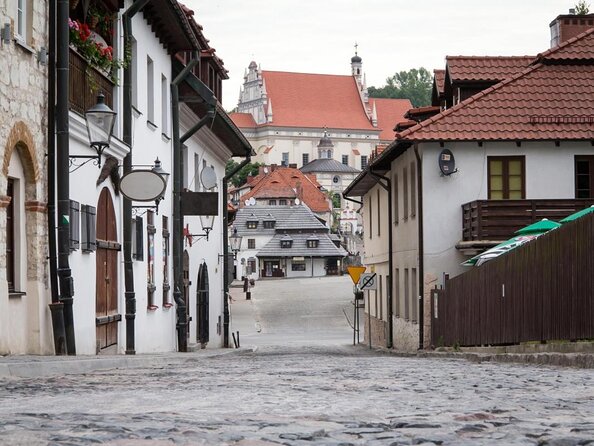
This tour is about more than ticking off landmarks. Its value is in connecting two parts of Kraków’s Jewish story: the long life of the community in Kazimierz and the violence inflicted on its residents after the Nazis created a ghetto in Podgórze.
Kazimierz, south of Wawel, was once an independent town. For centuries it was a center of Jewish life in Kraków. Today, its streets, synagogues and public spaces draw visitors, but the cart route helps you see the quarter as a place with a past and a present, rather than a collection of scenic facades.
The route then moves to Podgórze, which became part of Kraków in the 20th century. In 1941, the Nazi authorities turned part of the district into the Kraków Ghetto. The change in setting helps make the story clearer: Kazimierz was the home and center of a community, while Podgórze became the site of forced confinement and deportation.
An English-speaking driver guides the ride, and an audio guide is included. The combination can give you a steady account while the cart moves between sites. The human guide matters, too: visitors have singled out guides such as Matt, Natalie, Natalia, Olivia, Martina, Michael and Phillips for being friendly, lively or thoughtful. Names are not guaranteed, of course, but the comments point to a tour where the guide can add a lot to a short visit.
Szeroka Street and the heart of Jewish Kazimierz
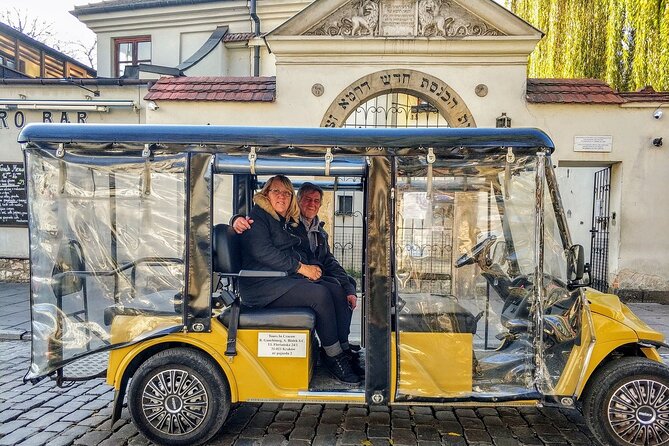
Szeroka Street is a natural place to pause and understand the scale of Jewish life in Kazimierz. It was the quarter’s central street, and four synagogues once stood here, an exceptional concentration for a European street. That detail gives the place weight even before you step inside a building.
One of the oldest synagogues in Poland, preserved in notably good condition, is also on Szeroka. The tour brings you to this historic center, though the amount of time to explore interiors can vary. Some groups have been given short breaks to enter buildings or take pictures; others may spend more time viewing from the cart.
This is worth keeping in mind if synagogue interiors are a priority. The tour is designed to cover many sites, not to provide a long architectural visit at each one. If you want to study a particular synagogue at leisure, note its location and return on foot after the ride.
The route also passes the area of the Jewish cemetery, according to the route description and accounts of the stops. A brief view can help orient you, but it is not the same as having time to explore the cemetery itself. The cart’s strength is linking places quickly; its limit is that you may not get the quiet, unhurried encounter that some sites deserve.
More Jewish heritage tours around Krakow:
- Krakow: Schindler’s Factory & Ghetto Guided Tour
★ 4.7 · 1,694 reviews - Krakow: Jewish Quarter and Former Ghetto Tour
★ 4.9 · 1,441 reviews - Krakow: Bike Tour of Old Town, Jewish Quarter and the Ghetto
★ 4.9 · 1,155 reviews
A ride that covers ground, with a few trade-offs
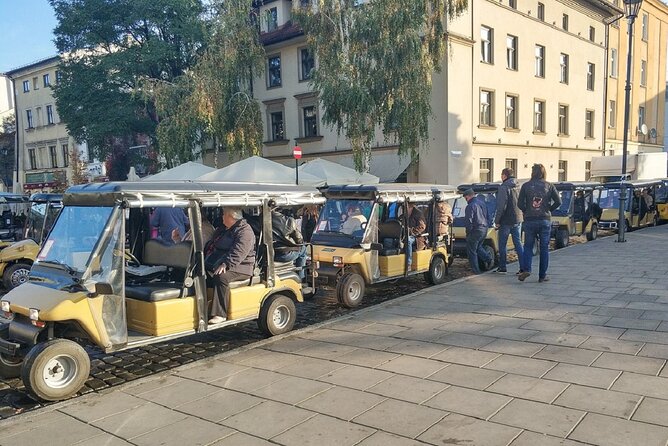
The electric golf cart is useful when your time or energy is limited. You can cross between Kazimierz and Podgórze without having to walk the full route, and the tour covers more than 20 cultural monuments in roughly an hour and a half. On a hot day or after a long day on your feet, having someone else drive can be a real comfort.
The format also makes a good introduction. You get a quick map in your head, hear the names and stories attached to the main places, and can decide what to revisit on foot. Some people have used it precisely this way, as a first pass before a slower, self-guided walk.
But this is still a vehicle tour. You see the city from a seat, and the guide has to keep the group moving to cover the route. There may be short opportunities to get out, but you should not assume that every site comes with a substantial stop or an interior visit.
A few practical details matter. The maximum group size is 50, which may feel less personal than a small walking tour. Seating can also vary: some people have been assigned rear seats, including seats facing backward. If being able to see forward matters to you, ask about seating when you arrive, while understanding that a preferred place may not be available.
The audio-guide element can help deliver information consistently, but it may limit conversation between people in your party. If you like to ask questions and chat as you go, the driver’s own commentary becomes especially important. The most satisfying tours appear to be those where the guide adds personal, well-paced explanations rather than relying only on recorded material.
Podgórze: St Joseph’s Church and the former ghetto
In Podgórze, the route includes St Joseph’s Church, a distinctive landmark above Podgórze Market Square. The square was a central point in the town before Podgórze was incorporated into Kraków during the 20th century. The church gives you a visual anchor in a district whose history is otherwise difficult to grasp from names and dates alone.
Some tours pause at churches and allow time to look inside. That can add welcome detail to the route, but it is also a point where expectations should be clear. This is a Jewish-quarter and ghetto tour, yet the interiors available to visit may be Christian churches rather than Jewish buildings. If your main interest is Jewish religious architecture, a dedicated walking tour or a separate synagogue visit may give you more time in the places you came to see.
The contrast between the districts becomes sharper as the cart reaches the former ghetto. A small fragment of the original wall survives, with a plaque marking the fate of the people who lived behind it. It is a modest physical remnant, and that is part of its force: the surviving piece helps you picture a boundary that once enclosed a far larger and more consequential space.
Plac Zgody, now associated with the former ghetto, was known as Concord Square before the occupation. Under Nazi rule, it became an Umschlagplatz, a gathering point where Jewish residents were assembled before deportation. The name and function are central to the tour’s most painful section. Your guide can place the square within the wider story of the ghetto, while the site itself makes the history feel less abstract.
The former Polish pharmacy offers a different kind of story. It operated as a refuge and point of support, helping people during deportations and passing messages or packages into and out of the ghetto. This is a small, human-scale stop in a route marked by great cruelty. It shows how a place could offer practical help even when the larger situation was desperate.
Together, the wall, square and pharmacy make the Podgórze portion especially affecting. The tour does not replace a fuller visit to Kraków’s wartime sites, but it gives you a visual starting point and a clearer sense of how ordinary streets became places of persecution.
What $34.75 buys you
At $34.75 per person, this is a mid-priced way to see a substantial part of the city in a short time. You are paying for transport, an English-speaking driver and an audio guide, as well as the convenience of joining Kazimierz and Podgórze in one route. There is no hotel pickup or drop-off, so you need to make your own way to and from the meeting points.
The value depends on how you like to explore. If you are short on time, tired, visiting in hot weather, or hoping to get an overview before choosing what to revisit, the cart can be worth the fare. It makes the distance between the districts easier and gives you a structured introduction without spending hours navigating on your own.
If you prefer to stop wherever you like, read every plaque and spend time inside Jewish sites, the price may feel less compelling. You could explore Kazimierz on foot at your own pace, but you would need to plan the route and cover the ground yourself. The cart’s advantage is efficiency, not depth at every stop.
The tour is booked, on average, 17 days ahead. That is a useful planning signal, especially if your Kraków schedule is tight, though the information does not mean every departure sells out. Confirmation is provided when you book, and the ticket is mobile.
More golf cart tours around Krakow:
- Krakow: City Sightseeing Tour by Electric Golf Cart
★ 4.5 · 3,264 reviews - Krakow: City Sightseeing Tour Eco Electric Buggy Golf Cart
★ 4.7 · 3,143 reviews - Krakow: Extended City Sightseeing Tour – Eco Buggy Golf Cart
★ 4.7 · 794 reviews - Krakow: Electric Car Sightseeing Tour
★ 4.4 · 450 reviews
Who should take this tour?
I would choose this tour if you want a concise introduction to Kazimierz and the former ghetto, or if you have limited time and would rather see a broad area before returning to selected sites. It is also a sensible choice if walking the full route feels tiring or if the weather is especially hot.
It suits people who want the main historical framework and an engaging guide, rather than a long seminar or a slow architectural study. The emotional content is serious, particularly in Podgórze, so come ready to give that part of the route your attention.
I would choose a walking tour instead if you want to set your own pace, spend longer at the cemetery or synagogues, and ask questions throughout. The cart offers breadth and convenience. A walk offers more control and, often, more time to notice small details.
Should you book it?
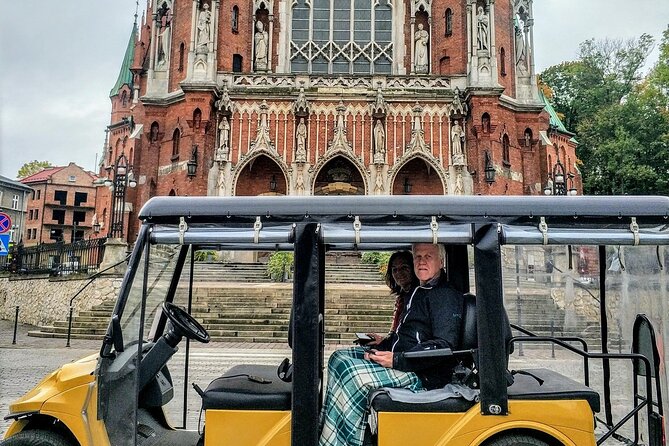
Book the golf-cart tour if you want to connect Kazimierz with the former ghetto in about 90 minutes and value comfort, orientation and a guide’s commentary. Treat it as a thoughtful overview, then return on foot to the synagogue, cemetery or other sites you want to explore more fully. If close-up visits and unhurried stops are your main goals, walk instead.
FAQ
How long is the tour?
The tour lasts approximately 1 hour and 30 minutes.
How much does it cost?
The listed price is $34.75 per person.
What language is the tour offered in?
The tour is offered in English, with an English-speaking driver and an included audio guide.
What is included in the price?
Transport by electric golf cart, an audio guide and an English-speaking driver are included.
Is hotel pickup included?
No. Hotel pickup and drop-off are not included.
Where does the tour start?
It starts at Mikołaja Zyblikiewicza 2, 31-029 Kraków, Poland.
Where does the tour end?
It ends at Mikołaja Kopernika 3, 31-034 Kraków, Poland.
How many people can join?
The maximum group size is 50 people.
Can most people participate?
Yes. The tour information says most people can participate, and the meeting point is near public transportation.
What is the cancellation policy?
You can cancel at least 24 hours before the start time for a full refund. Cancellations or changes made less than 24 hours before the start are not accepted, and the amount paid is not refunded.
Newly listed around Krakow
- Private Krakow to or from Airport Transfer★ 5.0 · 17 reviews
- Private Airport Transfer from/to Krakow Balice Airport★ 5.0 · 124 reviews
- Private Full-Day Zakopane and Thermal Baths Tour from Krakow★ 5.0 · 27 reviews
- Krakow: Polish Aviation Museum – Skip the Line Ticket★ 4.5 · 13 reviews
- Private Guided Walking Tour in Krakow Wine Bars★ 5.0 · 16 reviews
- Polish Countryside and Tyniec Abbey Bike Tour from Krakow★ 5.0 · 37 reviews
- Pierogi Cooking Class: Mastering the Art of Polish Dumplings★ 5.0 · 129 reviews
- Krakow Jewish District and Ghetto Guided Tour in a Small Group★ 5.0 · 12 reviews
Krakow Jewish Quarter Tours, compared.
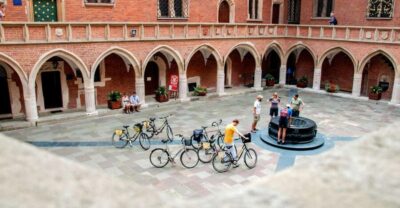
Bike Tour of Old Town, Jewish Quarter and the Ghetto
Read our review →
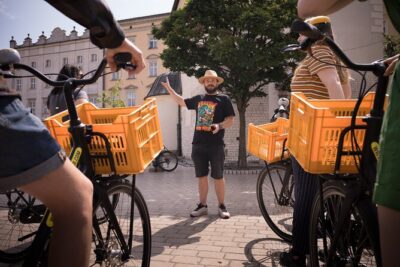
Full Bike Tour – the Old Town, Jewish Qtr & the Ghetto NEW BIKES
Read our review →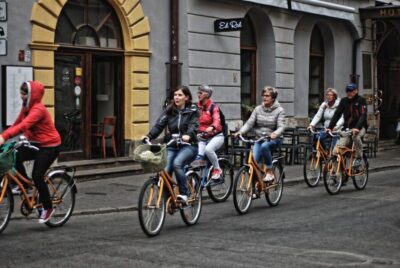
Bike Tour of the Old Town, Kazimierz, and the Ghetto
Read our review →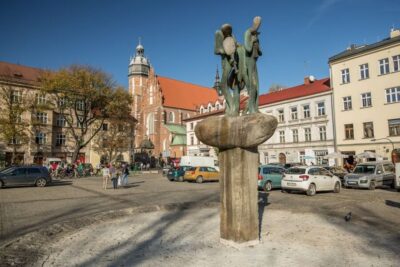
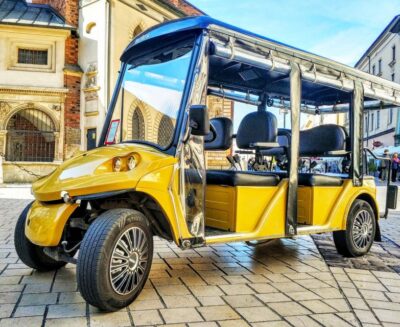
Jewish Quarter and Ghetto Electric Golf Cart Tour
Read our review →Browse the lists this tour appears in