
Reviewed · KRAKOW JEWISH QUARTER TOURS
Krakow: Jewish Ghetto Walking Tour
Kraków’s former ghetto is not a fenced-off historic site. It is part of Podgórze, a lived-in district where streets, buildings and a fragment of the old wall hold traces of wartime events. This one-hour walk gives those places context, from the forced confinement of more than 15,000 people to the deportations that took place at Ghetto Heroes Square.
I like two things in particular: the guide helps you read the surviving details in the streets, and the stories of Tadeusz Pankiewicz and his staff at Under the Eagle Pharmacy put individual acts of help alongside the larger history. Guides such as Olga, Joanna, Aga, Fil and Ewa have been praised for clear, thoughtful storytelling, and some have used old photographs to show how the area once looked.
The main limitation is the one-hour format. It is enough for a meaningful introduction, not an in-depth study, and the subject is painful. If you want time for longer discussion or a visit inside the pharmacy museum, check what your chosen option includes and plan extra time.
At a glance: the details that matter
- The route crosses the former ghetto in Podgórze, a neighborhood whose streets and buildings still form part of daily Kraków life.
- A surviving fragment of the Ghetto Wall helps make the forced confinement tangible: more than 15,000 people were crowded into a few city blocks.
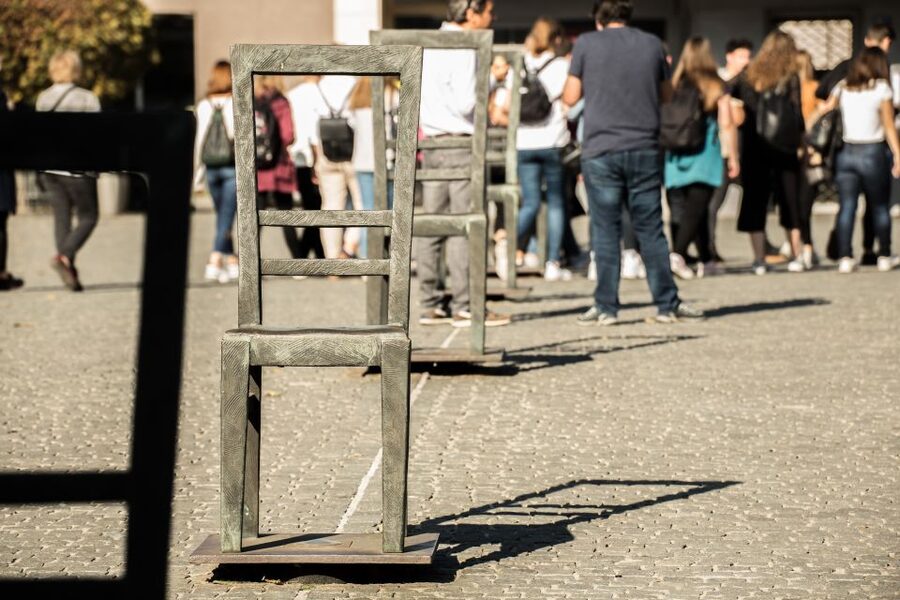
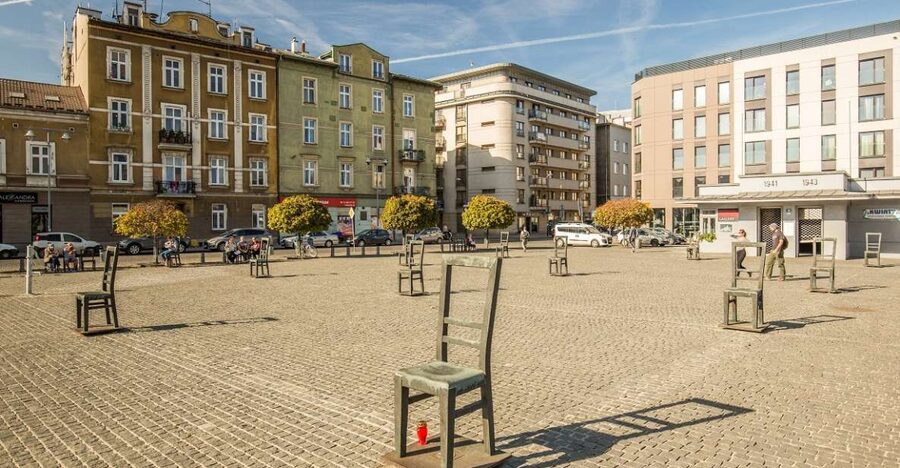
- Ghetto Heroes Square’s empty metal chairs memorialize lives lost during the Holocaust and mark a place associated with deportations.
- Under the Eagle Pharmacy brings the story of aid and courage into focus through the actions of Tadeusz Pankiewicz and his staff.
- The walk lasts about one hour and costs $11 per person, making it a relatively affordable way to add context to a visit to the district.
- The tour is offered in nine languages, with private groups available; group tours run in one selected language.
Reading the former ghetto through its streets
The tour takes place in Podgórze, the district that became the Kraków Ghetto during World War II. Rather than relying on a museum display alone, the guide leads you through the area where people were confined, using present-day streets and surviving traces to explain what changed under Nazi occupation.
That setting matters. The ghetto is not an isolated memorial park. The same streets now carry ordinary city life, and that contrast can make the history feel close at hand. A guide can help you notice how a familiar-looking street fits into the boundaries and daily geography of the ghetto, details that are easy to miss if you walk around on your own.
You will hear about how people were forced into the ghetto, the hardships of daily life, deportations and efforts to survive. The tour also addresses solidarity and acts of resistance. It cannot convey every individual story in an hour, but a well-paced walk can give you a framework for understanding the places you see and the events that happened there.
The licensed guides are central to the experience. Their job is not simply to name buildings, but to explain what those places meant to people at the time. Past guides have included Olga, Joanna, Aga, Fil, Ewa and Helen. Their approaches differ, but personal accounts describe guides who answer questions, speak with care and connect historical facts to individual lives. Fil, for example, used photographs to help show how the district looked in the past.
More Jewish heritage tours around Krakow:
- Krakow: Schindler’s Factory & Ghetto Guided Tour
★ 4.7 · 1,694 reviews - Krakow: Jewish Quarter and Former Ghetto Tour
★ 4.9 · 1,441 reviews - Krakow: Bike Tour of Old Town, Jewish Quarter and the Ghetto
★ 4.9 · 1,155 reviews
The wall fragment: a small remnant with a hard truth
One of the most affecting stops is the remains of the original Ghetto Wall. It is only a fragment, not a complete boundary that you can follow around the district. Its value lies in what it makes visible: the ghetto was a physical enclosure, imposed on a dense part of the city and used to confine more than 15,000 people in just a few blocks.
A guide can explain the wall’s place in the larger story and describe the difficult conditions within the ghetto. You will hear about daily hardship and the ways people tried to support one another, rather than being left to interpret the bricks without context. In a short tour, this combination of a visible remnant and a carefully explained human story is especially useful.
Keep your expectations realistic. Much of the original built environment has changed, and you should not expect a preserved wartime district with every building intact. The tour’s strength is the link between the fragments that remain and the history they help explain. As one guide put it through photographs, a visual comparison can help you picture what the area once looked like without pretending it has not changed.
Ghetto Heroes Square and its empty chairs
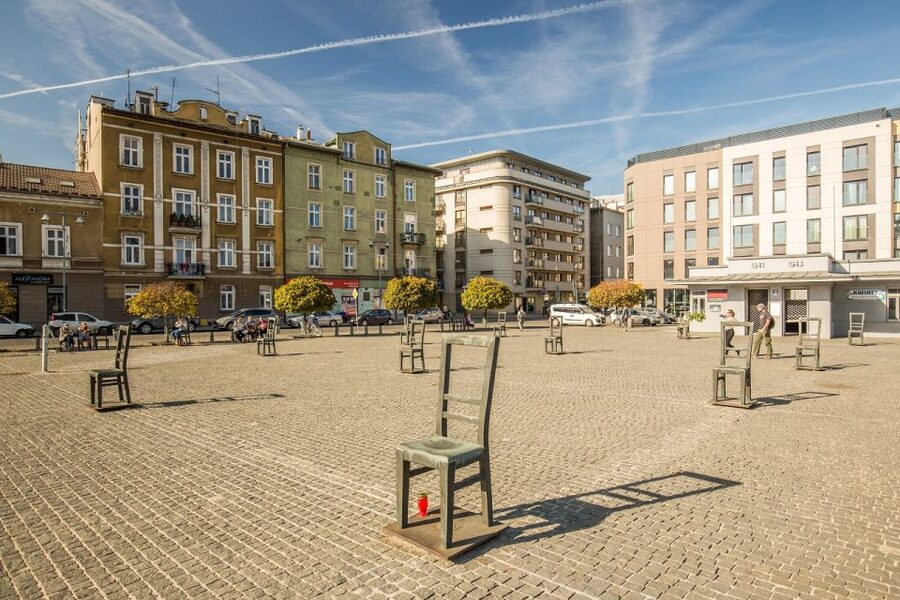
Ghetto Heroes Square is the emotional center of the route. During the war, it was a gathering place connected with deportations to concentration camps. Today, dozens of empty metal chairs form the Chair Memorial, a stark tribute to those who lost their lives in the Holocaust.
The memorial does not need much decoration to make its point. The empty chairs suggest absence, and the guide’s account gives that image historical meaning. You will learn why the square matters in the story of the ghetto and how it fits into the sequence of events people faced under occupation.
Allow yourself a little time here. The tour is only an hour, but this is a place where you may want to pause and take in what the guide has explained. The square is part of a public neighborhood, not a sealed exhibit, so the presence of everyday city life around it can sharpen the contrast between remembrance and the present.
The walk may end near the square, though the precise meeting point and route can vary by booking option. Check the details for your selected departure rather than assuming that every group starts and finishes in the same place.
Under the Eagle Pharmacy: help behind a pharmacy counter
Across from the square is the historic Under the Eagle Pharmacy, associated with pharmacist Tadeusz Pankiewicz. He and his staff risked their lives to help people in the ghetto, providing medicine and shelter. Their story offers a close-up view of courage and compassion amid the wider machinery of persecution.
The pharmacy stop gives the guide a chance to shift from the scale of walls and deportations to specific acts of assistance. That change of focus matters. It does not soften the cruelty of what happened, but it shows that the history includes choices people made to help others, often at serious personal risk.
The tour includes a visit to the pharmacy location, but the information provided does not guarantee entry to the museum or that it will be open during your walk. A visitor has found it closed on the day of their tour, so if seeing the interior matters to you, check opening details separately and leave time for a visit beyond the guided walk.
More walking tours around Krakow:
- Old Town Krakow & Wawel Castle Walking Tour
★ 5.0 · 1,508 reviews - Creepy Krakow: 2-Hour City Walking Tour
★ 4.7 · 1,131 reviews - Krakow: The Old Town Walking Tour
★ 4.8 · 794 reviews - Krakow: Kazimierz Jewish Quarter Walking Tour
★ 4.8 · 571 reviews
What one hour can, and cannot, cover
The walk is short, but it covers several significant sites: the wall remains, the square and the pharmacy, along with original buildings and street layouts. The route is described as a manageable walk, and one participant found the distance modest and the ground flat. Still, you will be on your feet, and the tour goes ahead in all weather.
One hour works well as an introduction or as a focused addition to a broader Kraków itinerary. You get a clear overview of the ghetto’s geography and key events without committing half a day. The trade-off is that the guide cannot spend a long time at every stop or answer every possible historical question in detail.
That time limit is also why I would treat the tour as a starting point, not a complete account of wartime Kraków. If a particular story catches your attention, you may want to read further or visit a related site afterward. The short format can leave you with useful questions rather than a false sense that one walk has covered everything.
Some people pair it with a visit to Schindler’s Factory. A few tours have started near the factory, and the ghetto walk can complement a museum visit by placing part of the history in its actual neighborhood. But the meeting point can vary by option, so confirm your own booking rather than counting on that start.
The guide makes the difference
The strongest part of this tour is the guide’s ability to connect place, fact and human experience. A wall fragment becomes more than a remnant; a square becomes more than a memorial; a pharmacy becomes a story of people taking risks to help others. That interpretation is what you lose if you simply wander through the district without a guide.
Guides such as Joanna and Olga have been praised for welcoming, clear explanations, while Aga and Ewa have been noted for sensitive storytelling. Fil has brought historical photographs, and other guides have kept the pace steady and made time for questions. These are individual guides, so no particular person or style is guaranteed, but the range of strong experiences suggests the tour relies on live interpretation rather than a fixed audio script.
If you have trouble hearing in a group, position yourself close to the guide. Some groups have used microphones or headsets, but equipment is not stated as a guaranteed feature. A guide’s pace and speaking style can vary, too. Ask your guide to repeat or clarify a point if you miss it.
The subject calls for attention and respect. Expect accounts of forced confinement, deportation, suffering and loss. Some guides also draw connections between the lessons of the past and current events; the emphasis can depend on the person leading the walk. You do not need prior knowledge of the ghetto to follow along, but you should be ready for a serious hour.
Price, languages and practical planning
At $11 per person, the tour offers good value if you want more than a self-guided stroll. The price covers a licensed guide and the walking tour, not food or drink. You are paying for the historical explanation and the stories tied to each stop, rather than admission to a collection of indoor attractions.
Tours are offered in English, French, German, Italian, Spanish, Russian, Portuguese, Swedish and Slovak. Group tours run in a single language, so choose your preferred language when booking. Private groups are available if you want a walk for your own party, though the available details do not specify how private-group pricing or timing differs.
Arrive 10 minutes early. The group cannot take late arrivals once it has set off, and missed departures are not refundable. The meeting point depends on the option you book, so check the exact location in your confirmation.
Dress for the forecast and wear comfortable shoes. The walk operates rain or shine, and winter conditions can be bitterly cold. One group was welcomed inside while waiting in temperatures of minus 9 degrees, but do not count on that arrangement. Bring layers, rain protection when needed and footwear suited to an outdoor walk.
The booking terms include free cancellation up to 24 hours in advance and a reserve-now, pay-later option. Those terms add flexibility if your plans are still shifting, but check the conditions shown for your selected booking before you confirm.
Who should take this walk
I would recommend this tour if you want to understand the former ghetto as a place where people lived, not only as a chapter in a history book. It is particularly useful if you are already visiting sites connected with the Nazi occupation and want a street-level account of daily life, deportations and survival.
It also suits visitors with limited time. The one-hour length is manageable, the price is modest, and the route links several important locations without asking you to spend a full day on one subject. A short walk is not a reason to rush through the history, though. Give yourself space afterward if you expect the subject to affect you.
You may want a longer or more specialized visit if you hope to spend extended time inside the pharmacy museum, cover the full history of Jewish Kraków, or explore every detail of the occupation. This tour is focused on the ghetto in Podgórze and its key landmarks. Its strength is not breadth, but a compact, guided explanation of places that can otherwise be hard to read.
Should you book the Kraków Jewish Ghetto Walking Tour?
Book it if you want a concise, thoughtful introduction to the former ghetto and value a guide who can explain what the remaining wall, square and pharmacy meant. At $11, it is a practical way to add context to a visit to Podgórze, especially if you are also seeing Schindler’s Factory.
Skip it if you are looking for a light sightseeing stroll or expect a preserved district with extensive original interiors. This is a serious walk through a neighborhood marked by trauma, and one hour can only cover the essentials. For most visitors interested in Kraków’s wartime history, I would make room for it, then allow extra time at the pharmacy or other sites if you want to continue learning.
FAQ
How long is the Kraków Jewish Ghetto Walking Tour?
The tour lasts about one hour.
What are the main stops on the walk?
The route includes a remaining section of the original Ghetto Wall, Ghetto Heroes Square and Under the Eagle Pharmacy. It also passes authentic wartime buildings and street layouts.
What is the Chair Memorial?
It is a group of empty metal chairs in Ghetto Heroes Square, commemorating lives lost during the Holocaust.
Which languages are available?
The tour is offered in French, German, Italian, English, Spanish, Russian, Portuguese, Swedish and Slovak. Group tours run in one language, selected when booking.
Is a private tour available?
Yes. Private groups are available.
Is food or drink included?
No. Food and drink are not included.
What happens if the weather is bad?
The tour goes ahead in all weather, rain or shine. Check the forecast and bring suitable clothing and footwear.
Newly listed around Krakow
- Private Krakow to or from Airport Transfer★ 5.0 · 17 reviews
- Private Airport Transfer from/to Krakow Balice Airport★ 5.0 · 124 reviews
- Private Full-Day Zakopane and Thermal Baths Tour from Krakow★ 5.0 · 27 reviews
- Krakow: Polish Aviation Museum – Skip the Line Ticket★ 4.5 · 13 reviews
- Private Guided Walking Tour in Krakow Wine Bars★ 5.0 · 16 reviews
- Pierogi Cooking Class: Mastering the Art of Polish Dumplings★ 5.0 · 129 reviews
- Polish Countryside and Tyniec Abbey Bike Tour from Krakow★ 5.0 · 37 reviews
- Krakow Jewish District and Ghetto Guided Tour in a Small Group★ 5.0 · 12 reviews
Krakow Jewish Quarter Tours, compared.

Bike Tour of Old Town, Jewish Quarter and the Ghetto
Read our review →
Full Bike Tour – the Old Town, Jewish Qtr & the Ghetto NEW BIKES
Read our review →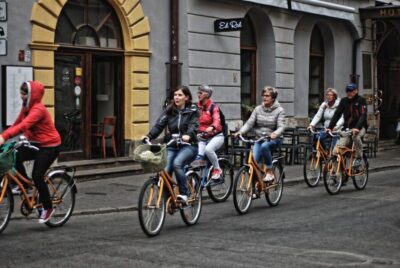
Bike Tour of the Old Town, Kazimierz, and the Ghetto
Read our review →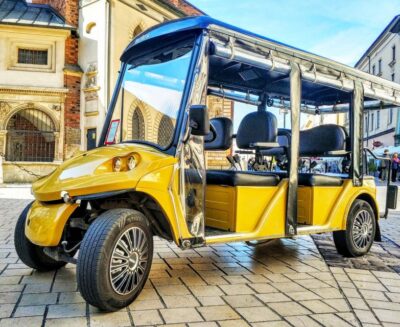
Jewish Quarter and Ghetto Electric Golf Cart Tour
Read our review →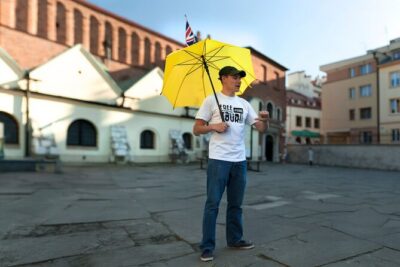
Browse the lists this tour appears in