
Reviewed · KRAKOW MUSEUM TOURS
Archaeological Museum of Krakow Entrance Ticket
The museum’s most arresting object is Światowid, a four-faced pagan statue from the 9th to 10th century, discovered in 1848 near the Zbrucz River. I like that the collection connects this striking figure to archaeological finds from across Lesser Poland, and that the main museum occupies a former monastery that later became a prison.
The main drawback is that this is an unguided entry ticket, so you’ll need to make sense of the exhibits at your own pace. There has also been a reported ticket problem: one buyer arrived without a QR code and was refused entry, so check that your ticket arrives before setting out.
Key points
- Światowid is the headline object: A four-faced pagan figure dating to the 9th or 10th century, found in 1848 near Zbrucz.
- The main museum has a layered past: It occupied a Barefoot Carmelite monastery before becoming St. Michael’s Prison under Austrian rule.
- The museum has three distinct locations: The main building, an underground exhibition beneath St. Wojciech’s Church, and the Nowa Huta-Branice branch.
- The ticket is self-guided: No guide is included, so plan to explore independently.
- Check your ticket and opening hours: The final entry is 90 minutes before closing, and the museum’s hours can change.
A pagan statue at the center of the visit
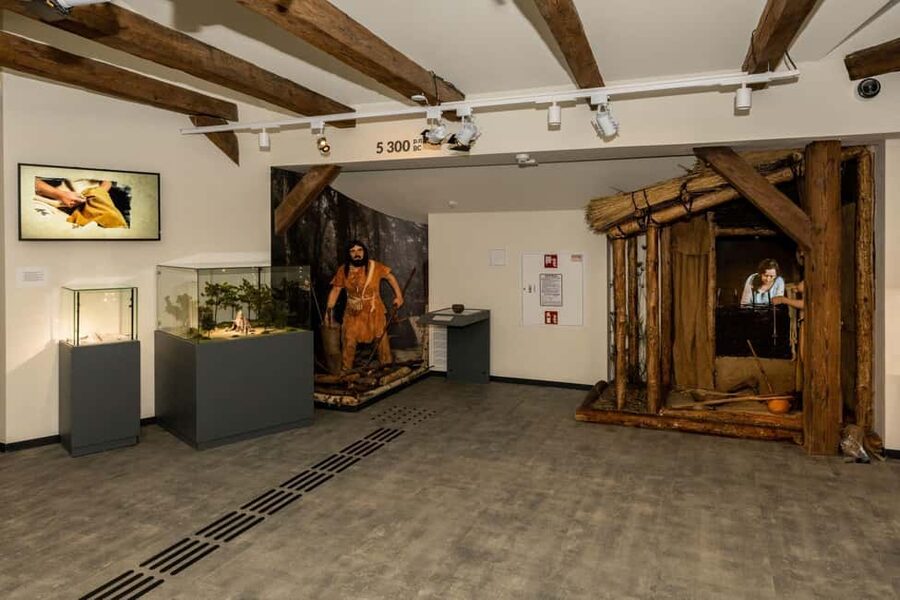
The Archaeological Museum offers a different kind of Krakow outing. Instead of royal apartments or a grand art collection, you get objects that help explain how people lived and believed in the region long before the city’s familiar churches and squares took shape.
Start with Światowid, the museum’s best-known object. This four-faced pagan god dates to the 9th or 10th century and was discovered in 1848 in Zbrucz. Its age, unusual form, and place in pre-Christian belief make it an especially useful anchor for a visit. You are not just looking at an old statue; you are looking at a surviving clue to a world whose beliefs and rituals can be harder to picture than later religious traditions.
The museum’s other archaeological treasures come from Lesser Poland. The available details do not name individual pieces or describe a fixed route through the galleries, so it is wise to arrive ready to follow the displays rather than expecting a specific sequence. The collection’s regional focus is part of its value: it offers a way to think about Krakow and its surroundings as places with a long history, not just as a medieval city center.
More museum visits around Krakow:
- Auschwitz-Birkenau Museum and Memorial Guided Tour from Krakow
★ 4.5 · 1,510 reviews - Krakow: Rynek Underground Museum Guided Tour
★ 4.6 · 1,122 reviews - Krakow Schindler’s Factory Museum Guided Tour in English
★ 4.5 · 650 reviews
From Carmelite monastery to St. Michael’s Prison
The main museum’s address carries an unusual past. The building once housed the Monastery of St. Michael, where the Barefoot Carmelites operated for decades. In the 19th century, the Austrians, then stationed in Krakow, converted the building into a prison.
The prison kept the monastery’s name and became known as St. Michael’s Prison. After World War II, it closed, and the Archaeological Museum was established there. That change of use gives the visit an extra layer: the building is not simply a container for old objects, but a place that has passed through religious, political, and civic roles.
You should not expect the ticket details to promise a dedicated tour of the former prison. The attraction described here is museum admission, and no guide is included. Still, knowing the building’s history gives you a useful lens as you walk through it. Krakow’s past is often told through its churches and royal sites; here, the former monastery and prison add a less ceremonial chapter.
Three museum locations, three different angles
The Archaeological Museum has two branches in addition to its main building. They offer distinct settings and subjects, but do not assume that one entrance ticket automatically includes all three. Check the specific option you book to confirm which location it covers.
The branch beneath St. Wojciech’s Church sits on Krakow’s Main Square. Its underground exhibition presents the history of the square, the church, and its patron, Saint Wojciech. You can see remnants of wooden and stone floors, along with Romanesque walls. That makes this branch a practical choice if you want archaeological evidence tied directly to one of Krakow’s most central places.
The Nowa Huta-Branice branch connects archaeology with the city’s modern industrial story. Discoveries began there in 1949 during early construction work in the area that became closely linked with the Nowa Huta district and its metallurgical plant. The location’s appeal is different from the main museum’s: it links finds to the growth of a district and its industrial surroundings.
The main building is the obvious choice if Światowid is your priority. The church branch suits anyone interested in the Main Square’s earlier layers, while Nowa Huta-Branice has a stronger connection to the district’s development. Since the information for this ticket does not specify branch access, confirm the included location before planning your route.
What a self-guided visit is like
This is a straightforward museum visit, not a guided tour. Your ticket covers entrance, but there is no guide to set the pace or explain the exhibits. If you enjoy moving slowly and reading displays for yourself, that freedom can be a plus. If you want context and interpretation from a person, this may feel a little bare.
There is no stated itinerary or set duration for the museum visit. The ticket is described as valid for one or two days, depending on the option, while the available starting times should be checked during booking. Treat that validity as a ticket condition, not as a promise that you need two days to see the main museum.
The locations also matter when you plan your day. St. Wojciech’s Church is on the Main Square, while Nowa Huta-Branice is associated with the Nowa Huta district. The details here do not provide transport instructions or say how travel between sites is handled, so do not build a multi-branch day around the ticket until you have checked exactly what it covers and where you need to go.
More tickets and passes around Krakow:
- Krakow to Auschwitz Birkenau Guided Tour with Transfer and Ticket
★ 5.0 · 8,197 reviews - Krakow: Wieliczka Salt Mine Fast-Track Ticket & Guided Tour
★ 4.5 · 5,872 reviews - Auschwitz Birkenau Guided Tour with Ticket Hotel Pickup Small Van
★ 5.0 · 4,769 reviews - From Krakow: Wieliczka Salt Mine Tour & Skip the Line Ticket
★ 4.4 · 3,925 reviews
Is $2.13 good value?
The listed price is $2.13 per person, a low cost for a museum visit if that is the price available for your chosen date and ticket option. The value is strongest if you are curious about archaeology, pre-Christian beliefs, or the history of Krakow beyond its best-known landmarks. Even a short visit focused on Światowid gives you a distinctive subject that differs from the city’s more familiar royal and religious collections.
There is an important comparison to make before you buy: entrance to the Archaeological Museum is free for Krakow City Card holders. If you already have that card, paying separately may not make sense. The Krakow City Pass is described as giving access to 36 museums and landmarks, including the main Archaeological Museum, the Nowa Huta-Branice branch, and the underground exhibition at St. Wojciech’s Church. Compare the pass’s price and included attractions with your own plans rather than buying it just for this one museum.
The low ticket price does not remove the need to verify your booking. A documented problem involved a buyer who did not receive a QR code and was turned away at the ticket office. Before you leave, make sure you have the ticket or entry code required for admission. If it has not arrived, contact the provider, Discover Cracow, rather than assuming the booking confirmation alone will work.
Timing, entry, and small practical checks
Opening hours may differ from those shown on a booking page, so check the Archaeological Museum’s official website before you go. The last entrance is 90 minutes before closing. That cutoff is generous for planning purposes, but it is still worth arriving with enough time to see the exhibits you care about rather than walking in just before the doors close.
The meeting point may vary depending on the option booked, and the activity ends back at that meeting point. Since this is an entrance ticket rather than a guided tour, check the instructions for the exact location. The ticket’s stated validity is one or two days, and starting times depend on availability.
Smoking, alcohol, and drugs are not allowed. If plans change, the activity offers free cancellation up to 24 hours in advance for a full refund. Check the exact terms attached to your selected option before relying on that flexibility.
Who should book this museum ticket?
I would consider this ticket if you want a modestly priced, self-guided museum visit with a clear highlight in Światowid and a subject rooted in Lesser Poland. It is especially suited to visitors who enjoy archaeology, early belief systems, and seeing how an old building’s use changed over time. The former monastery and prison story adds context without requiring a separate tour.
It is less suitable if you want a guide to explain the objects or if you expect a clearly defined route and visit length. The branch locations also require a little care: decide which site you want, then confirm that the ticket covers it. If you hold a Krakow City Card, check your included admission before paying.
My practical advice is simple: book for the main museum if Światowid is your reason for going, verify that your QR code or ticket has arrived, and check opening hours on the museum’s official site. If you want the church or Nowa Huta branch too, confirm access rather than assuming the ticket covers every location.
FAQ
What is the main attraction at the Archaeological Museum?
The best-known object is Światowid, a four-faced pagan god dating to the 9th or 10th century. It was discovered in 1848 in Zbrucz.
Is a guide included with the entrance ticket?
No. The ticket includes museum entrance only, and no guide is included.
Which branches does the Archaeological Museum have?
Alongside the main building, the museum has a branch beneath St. Wojciech’s Church on the Main Square and another at Nowa Huta-Branice.
Does a Krakow City Card holder need to buy this ticket?
No. Entrance to the Archaeological Museum is free for Krakow City Card holders.
When is the last entrance?
The last entrance is 90 minutes before closing. Opening hours may change, so check the museum’s official website for current times.
Can I cancel the ticket?
Yes. Free cancellation is available up to 24 hours in advance for a full refund.
Newly listed around Krakow
- Private Krakow to or from Airport Transfer★ 5.0 · 17 reviews
- Private Airport Transfer from/to Krakow Balice Airport★ 5.0 · 124 reviews
- Private Full-Day Zakopane and Thermal Baths Tour from Krakow★ 5.0 · 27 reviews
- Krakow: Polish Aviation Museum – Skip the Line Ticket★ 4.5 · 13 reviews
- Private Guided Walking Tour in Krakow Wine Bars★ 5.0 · 16 reviews
- Pierogi Cooking Class: Mastering the Art of Polish Dumplings★ 5.0 · 129 reviews
- Polish Countryside and Tyniec Abbey Bike Tour from Krakow★ 5.0 · 37 reviews
- Krakow Jewish District and Ghetto Guided Tour in a Small Group★ 5.0 · 12 reviews
Krakow Museum Tours, compared.
Auschwitz-Birkenau Museum and Memorial Guided Tour from Krakow
Read our review →
Krakow Schindler’s Factory Museum Guided Tour in English
Read our review →
Auschwitz Birkenau Museum Guided Tour with Pickup
Read our review →

Auschwitz Birkenau Museum and Salt Mine All Inclusive DAY TRIP with Local Guides
Read our review →Browse the lists this tour appears in