
Reviewed · KRAKOW JEWISH QUARTER TOURS
Cracow – Guided Tour of the Jewish Ghetto
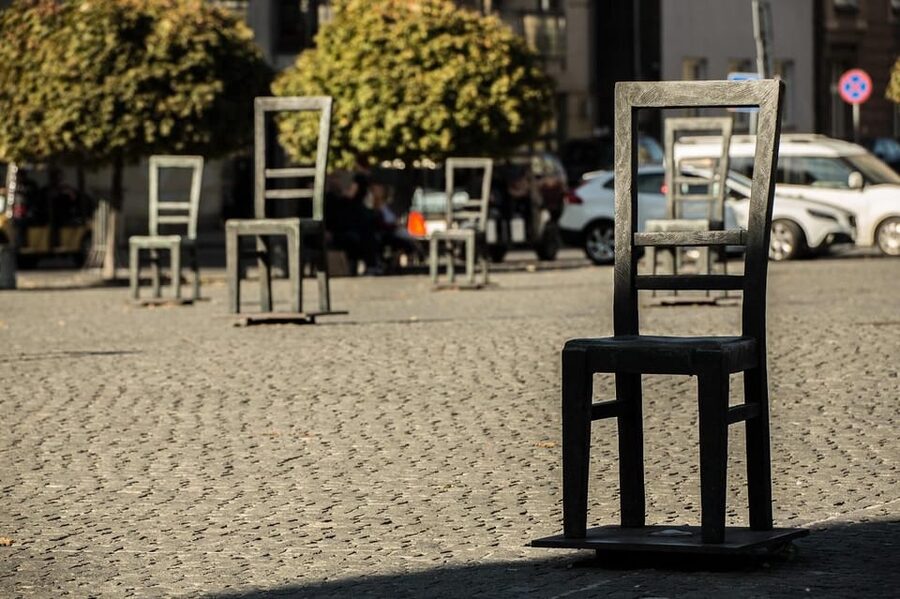
In Podgórze, Krakow’s wartime Jewish Ghetto is not an abstract chapter in a book. It is a neighborhood you can walk through, with a remnant of the wall, buildings where displaced Jews were forced to live, and Ghetto Heroes’ Square, where residents were identified and deported. I like that the route ends at the Under the Eagle pharmacy, a place tied to survival amid persecution.
I also like the one-hour format and the chance to hear the story in English, German, French, Spanish, or Italian. At $15, it’s an accessible way to add historical context to a visit to the district. The trade-off is time: one hour is brief for a subject this weighty, and the quality of the explanation can vary.
Key points to know
- Ghetto Heroes’ Square is a central stop, where Jewish residents of Krakow were identified and deported to concentration camps.
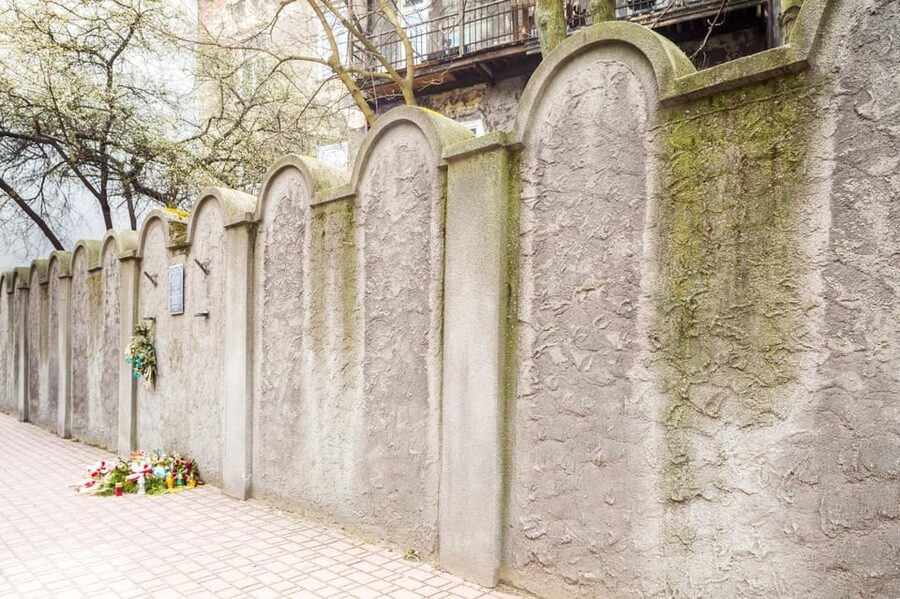
- A surviving piece of the ghetto wall offers a tangible reminder of the boundary that once enclosed the district.
- The route passes former ghetto housing, where thousands of displaced Jews endured cramped conditions.
- The Under the Eagle pharmacy is the final stop and a symbol of resilience and survival.
- One hour keeps the price low, but leaves little room for extended discussion or questions.
Walking through Podgórze’s wartime history
This is a focused walk through Podgórze, the district that served as the Jewish Ghetto during World War II. The tour’s value lies in connecting the place you see today with what happened here: Jewish residents were forced into the district, confined in cramped living conditions, and later identified and deported from the square now known as Plac Bohaterów Getta, or Ghetto Heroes’ Square.
The experience is not a general introduction to all of Krakow’s Jewish history. It centers on the ghetto and its physical traces. That focus is useful if you want to understand this particular chapter without committing to a longer tour, though it also means you should not expect a broad survey of Jewish life in the city.
The subject calls for a measured pace and thoughtful explanation. The streets and buildings are part of an inhabited district, not a museum display, so the guide helps you read the setting and understand why these ordinary-looking places carry such difficult meaning. You are not simply ticking off monuments. You are seeing where people were compelled to live and how the neighborhood became part of a system of persecution.
More Jewish heritage tours around Krakow:
- Krakow: Schindler’s Factory & Ghetto Guided Tour
★ 4.7 · 1,694 reviews - Krakow: Jewish Quarter and Former Ghetto Tour
★ 4.9 · 1,441 reviews - Krakow: Bike Tour of Old Town, Jewish Quarter and the Ghetto
★ 4.9 · 1,155 reviews
Ghetto Heroes’ Square and the deportations
Plac Bohaterów Getta is one of the tour’s most significant stops. The square is associated with the identification and deportation of Krakow’s Jewish residents to concentration camps. Its importance is not only historical: it gives the route a clear point around which to understand the upheaval experienced by people in the ghetto.
Expect the guide to place the square in the wider story of the district and its residents. A live explanation matters here. The facts are stark, and a guide can help connect them to the streets and buildings you are standing among, rather than leaving you to piece together the meaning from a marker alone.
The limited duration is most apparent at this stop. A short visit can introduce the site and its role, but may not allow much time for questions or reflection. If this is a subject you want to explore at length, treat this walk as an introduction and leave room in your plans for further reading or another visit to the area.
The ghetto wall and former housing
A remaining fragment of the original ghetto wall is another key part of the walk. It is a small physical trace of the boundary that surrounded the ghetto, and that scale can be sobering. You can look closely at a real piece of the structure rather than hearing about the enclosure only in general terms.
The fragment is now a monument and a place of pilgrimage for Jewish visitors from around the world. That gives the stop a present-day meaning as well as a historical one. It is a reminder that the district’s story is not only local history, but part of a broader history of persecution and remembrance.
The route also passes buildings where thousands of displaced Jews lived in cramped conditions. Seeing these homes helps bring the experience down to human scale. The buildings are not a substitute for a full account of what residents endured, but they make the setting harder to treat as distant or abstract.
Keep your expectations grounded: the tour passes the buildings, rather than promising an interior visit. Its strength is the context the guide can provide while you walk through the neighborhood. If you are particularly interested in architecture or want to spend time examining each location, the one-hour schedule may feel brisk.
Ending at the Under the Eagle pharmacy
The walk concludes at the historic Under the Eagle pharmacy. It is presented as a symbol of resilience and survival amid the turmoil of war, giving the tour a final point that is distinct from the square and wall.
Ending here helps round out the route. The ghetto’s story includes forced confinement and deportation, but the pharmacy offers a place to consider survival within that same setting. It is a meaningful final stop, though the supplied details do not specify whether the tour enters the pharmacy or only visits it from outside. Ask your guide if seeing the interior matters to you.
The sequence also makes practical sense: you move through the district’s broader setting, encounter the square and wall, pass the former housing, and finish at a specific historic site. In an hour, that gives the walk a clear arc rather than a string of disconnected stops.
More guided departures around Krakow:
- From Krakow: Auschwitz-Birkenau Guided Tour & Hotel Pickup
★ 4.5 · 33,358 reviews - From Krakow: Auschwitz-Birkenau Guided Tour & Hotel Pickup
★ 4.5 · 29,340 reviews - Krakow: Auschwitz Guided Tour with Optional Hotel Pickup
★ 4.5 · 15,280 reviews - Krakow: Auschwitz-Birkenau Guided Tour with Pickup & Lunch
★ 4.5 · 9,800 reviews
The guide makes the hour count
A professional live guide is included, and the tour is offered in English, German, French, Spanish, and Italian. That is useful for a history walk where names, events, and context matter. The strongest aspect reported by participants is the guide’s command of the subject and compassionate delivery. One person specifically praised an Italian-speaking guide’s fluent Italian.
But guide quality is not guaranteed to feel identical on every departure. One sharply negative account described very sparse commentary, while other experiences were strongly positive. That contrast matters on a tour this short: if the guide gives only brief remarks at each stop, the route can feel more like a walk between locations than an explanation of the history.
You can help the hour work well by arriving ready to listen and asking questions when there is an opening. The tour provides a guide, but it does not promise a particular named guide, a set group size, or a fixed amount of time at each stop. If you have a particular language preference, check that the departure you choose is offered in that language.
Is $15 good value for one hour?
At $15 per person, this is a modest-cost way to understand an important part of Krakow’s wartime history. The price includes a professional guide, and the walk brings together several relevant sites in Podgórze. You are paying less for a long list of attractions than for the local context that links the square, wall, housing, and pharmacy.
The short duration is both the value and the limitation. It makes the tour easy to fit into a day and keeps the cost down, but it cannot offer a detailed account of every aspect of the ghetto’s history. If you want a concise orientation, the price is reasonable. If you expect a long, in-depth discussion, one hour may not satisfy you.
Food and drink are not included, though that is not a major concern for a walk of this length. There is no need to budget for a meal as part of the activity itself.
Meeting point, language, and booking details
The guide waits at the entrance to the Schindler Factory Museum and carries an excursions.city sign. Check the exact starting time when choosing a departure, since availability varies. The tour lasts one hour and is offered with a live guide in English, German, French, Spanish, or Italian.
You can reserve now and pay later, which leaves room to adjust plans. Cancellation is free up to 24 hours before the tour for a full refund. These terms are handy if you are still organizing your Krakow schedule, but confirm the departure language and time before booking.
Who should book this walk?
I’d choose this tour if you want a compact, guided introduction to the Jewish Ghetto in Podgórze, especially if you value seeing the actual district rather than learning only from a book or exhibit. It is also a sensible choice if you have one hour free and want a guide to connect the square, wall, former housing, and pharmacy.
It may not be the right fit if you want a slow, extensive treatment of the subject or need guaranteed depth from a particular guide. The hour is short, and guide delivery can vary. Still, at $15, it offers a practical starting point for understanding the area. Book it for a focused walk and a clear introduction, not as the last word on Krakow’s Jewish history.
FAQ
How long is the guided tour?
The tour lasts one hour.
How much does the tour cost?
The listed price is $15 per person.
Where does the tour meet?
Meet at the entrance to the Schindler Factory Museum. Look for a guide carrying an excursions.city sign.
What places are included in the walk?
The tour visits Ghetto Heroes’ Square, a remaining piece of the ghetto wall, buildings where displaced Jews lived, and the Under the Eagle pharmacy.
Which languages are available?
Live guides are available in English, German, French, Spanish, and Italian.
Is food or drink included?
No. Food and drink are not included.
Can I cancel and receive a refund?
Yes. You can cancel up to 24 hours in advance for a full refund.
Do I have to pay when I reserve?
No. The reserve-now, pay-later option lets you book without paying at the time of reservation.
Newly listed around Krakow
- Private Krakow to or from Airport Transfer★ 5.0 · 17 reviews
- Private Airport Transfer from/to Krakow Balice Airport★ 5.0 · 124 reviews
- Private Full-Day Zakopane and Thermal Baths Tour from Krakow★ 5.0 · 27 reviews
- Krakow: Polish Aviation Museum – Skip the Line Ticket★ 4.5 · 13 reviews
- Private Guided Walking Tour in Krakow Wine Bars★ 5.0 · 16 reviews
- Pierogi Cooking Class: Mastering the Art of Polish Dumplings★ 5.0 · 129 reviews
- Polish Countryside and Tyniec Abbey Bike Tour from Krakow★ 5.0 · 37 reviews
- Krakow Jewish District and Ghetto Guided Tour in a Small Group★ 5.0 · 12 reviews
Krakow Jewish Quarter Tours, compared.
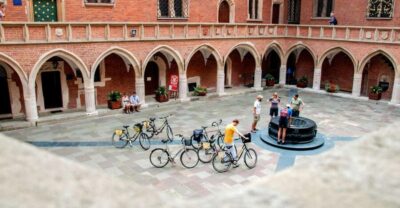
Bike Tour of Old Town, Jewish Quarter and the Ghetto
Read our review →
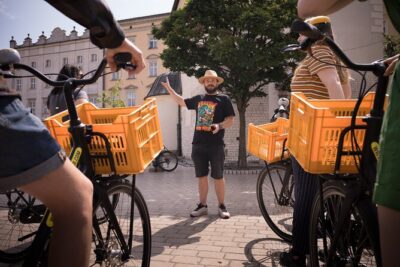
Full Bike Tour – the Old Town, Jewish Qtr & the Ghetto NEW BIKES
Read our review →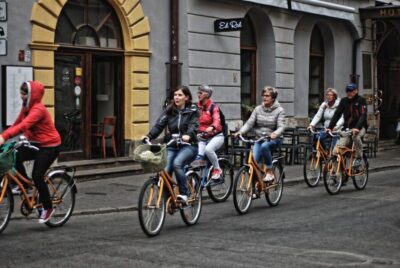
Bike Tour of the Old Town, Kazimierz, and the Ghetto
Read our review →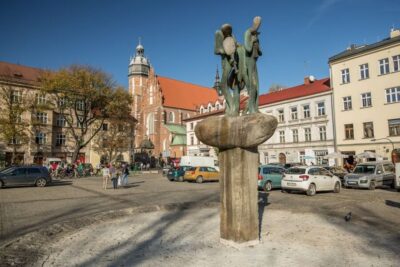
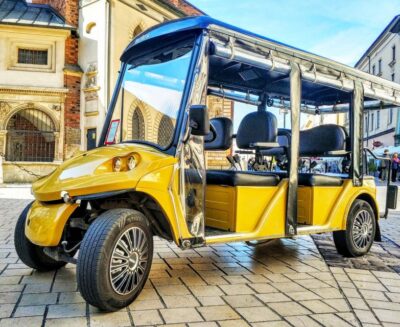
Jewish Quarter and Ghetto Electric Golf Cart Tour
Read our review →Browse the lists this tour appears in