
Reviewed · KRAKOW JEWISH QUARTER TOURS
Krakow: Guided Tour of the Jewish Ghetto
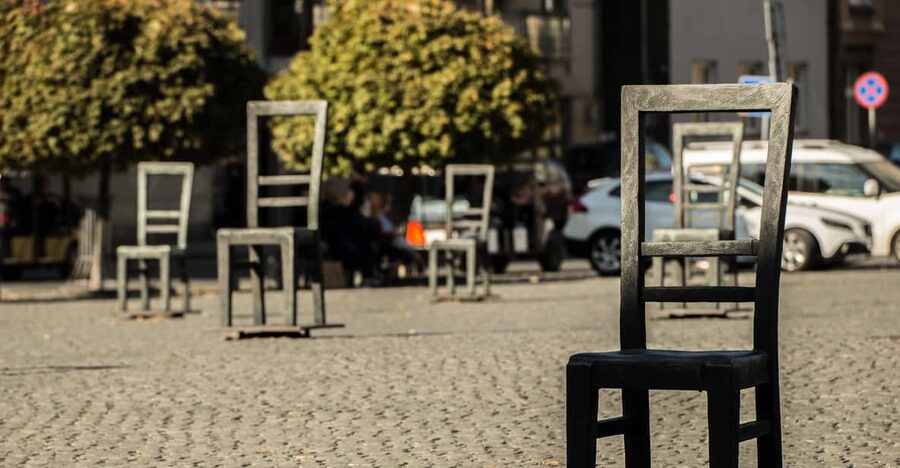
Kraków’s former Jewish Ghetto is not a place you take in from a scenic overlook. You walk its streets, see the fragment of wall that remains, and stand in Ghetto Heroes Square, where empty metal chairs mark lives lost during the Holocaust. The setting is quiet, but the history is not.
I like two things about this walk: it connects specific places to the people who lived and worked there, and it gives you a licensed guide to explain what you’re seeing in your chosen language. The stories about help provided at Under the Eagle Pharmacy bring a human focus to a route that could otherwise feel like a list of tragic events.
The main consideration is time. One hour is enough for a focused introduction, not an exhaustive account of Kraków during World War II. If you want a longer visit at each site, allow extra time before or after the tour.
What matters on this one-hour walk
- The remaining Ghetto Wall offers a direct, physical reminder of the boundary that confined more than 15,000 people within a few city blocks.
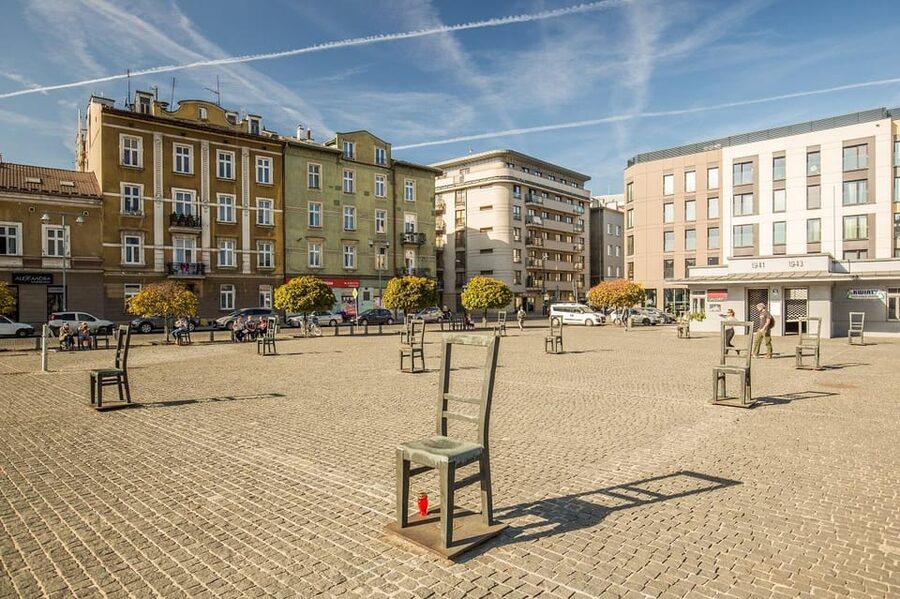
- Ghetto Heroes Square shifts the focus from streets and walls to deportations and remembrance, with dozens of empty chairs forming its memorial.
- Under the Eagle Pharmacy brings the story of Tadeusz Pankiewicz and his staff into view, including their efforts to provide medicine and shelter.
- Podgórze’s wartime streets help you connect the history to real buildings and street layouts rather than an abstract timeline.
- The licensed guide leads the walk in English, German, Italian, French, or Spanish, and can help put the stops into context.
- The price is $15 per person for a one-hour guided walk. Food and drink are not included.
Starting in Podgórze, where the ghetto took shape
The walk begins in Podgórze, the district where the Kraków Ghetto was established during World War II. Meet your guide at the entrance to the Schindler Factory Museum and look for the sign marked excursions.city. That clear landmark makes the meeting point easier to find, especially if you are navigating an unfamiliar district.
From there, the tour takes you through streets associated with life inside the ghetto. The value of walking here is simple: the history is tied to a real place, with surviving buildings and street layouts that help you picture how people moved through their surroundings. Your guide supplies the context that streets alone cannot provide.
You will hear about daily life, fear, hope, and survival, as well as the deportations that shaped the area’s wartime story. The tour also addresses bravery and resistance. It is a compact introduction, so expect the guide to focus on the main sites and themes rather than cover every detail of the ghetto’s history.
I would arrive with a little time to spare, not because the meeting point is complicated, but because a prompt start matters on a one-hour walk. The tour is short enough to fit into a busy Kraków day, though its subject deserves your attention. Put away distractions and give the guide room to explain what the streets mean.
More Jewish heritage tours around Krakow:
- Krakow: Schindler’s Factory & Ghetto Guided Tour
★ 4.7 · 1,694 reviews - Krakow: Jewish Quarter and Former Ghetto Tour
★ 4.9 · 1,441 reviews - Krakow: Bike Tour of Old Town, Jewish Quarter and the Ghetto
★ 4.9 · 1,155 reviews
The wall fragment that makes the boundary visible
One of the most direct stops is the remains of the original Ghetto Wall. The surviving fragment is a small piece of a much larger system of confinement. More than 15,000 people were enclosed within just a few city blocks, a scale that is difficult to grasp until you connect the number to the restricted space around you.
A wall can look like an ordinary piece of masonry if you do not know what it represented. Here, the guide explains its role in enclosing the ghetto and the pressures that shaped life inside its boundaries. That context matters: the wall is not simply an old structure to photograph, but a remnant of a system that restricted people’s lives.
This is likely to be one of the tour’s most sobering moments. The fragment cannot tell the full story by itself, and the visit is brief, but it gives the history a physical anchor. You can see what remains while hearing about hardship and solidarity within the ghetto.
If you want to spend longer looking at the wall or reflecting on what you have heard, plan to return on your own after the guided walk. The tour’s one-hour limit means you will move on, and that is a practical point to keep in mind if you prefer a slow pace at memorial sites.
Ghetto Heroes Square and its empty chairs
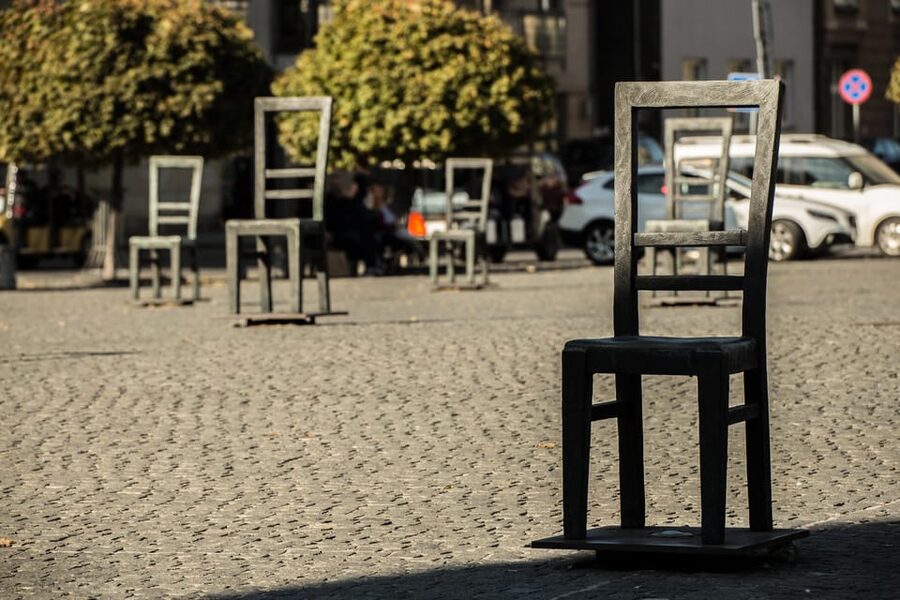
The route continues to Ghetto Heroes Square, described as the heart of the ghetto. During the war, the square was a gathering place for deportations to concentration camps. Today, dozens of empty metal chairs form a memorial. Each chair represents a life lost during the Holocaust.
The chairs make the square’s history visible without turning it into a conventional monument. Their emptiness is the point. They suggest absence, displacement, and the human cost of deportation, while leaving the square itself open around them. Your guide can explain how the site’s wartime role connects to the memorial you see now.
This is a place where the guide’s pacing and explanation are especially useful. You may already know the broad history of the Holocaust, but the square links that history to a particular location in Kraków. It helps you understand that deportation was not a distant event in an abstract chronology. It happened in this district, in a public space that remains part of the city.
I would not treat this stop as a quick photo break. The memorial is visually simple, and the tour is short, so take a moment to look at the chairs and listen closely. If you are visiting with children or anyone who may find the subject difficult, consider explaining beforehand that the walk addresses deportations, suffering, and loss.
Under the Eagle Pharmacy and the story of help
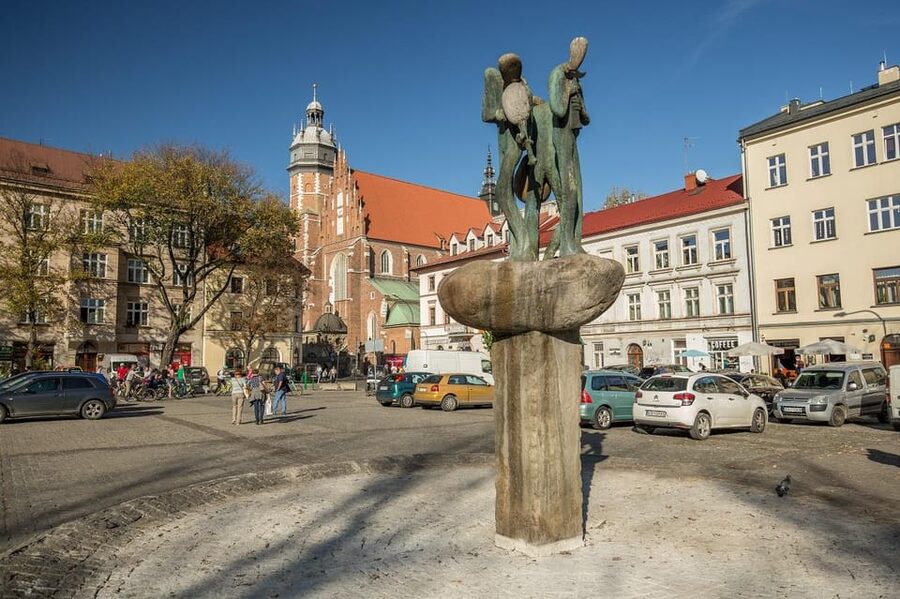
Across from the square is the historic Under the Eagle Pharmacy, linked to Tadeusz Pankiewicz and the staff who risked their lives to help people in the ghetto. The tour tells how they provided medicine and shelter. That story offers a different kind of focus from the wall and square: it turns attention to individual choices and acts of compassion amid danger.
The pharmacy is an important stop because it keeps the history from being only about confinement and deportation. You hear about people who tried to help others, and about the risks involved in doing so. The title of the pharmacy may sound like a small detail, but the place gives the guide a concrete way to discuss courage and care under wartime conditions.
The information provided for this tour does not specify whether you enter the pharmacy, so think of the stop as a chance to see the historic site and hear its story, rather than assuming interior access is part of the walk. If visiting the interior is important to you, check separately before making plans around it.
There is also a personal side to a guided walk. A past visitor attending a rugby tournament received a recommendation for a local rugby bar from the guide. That is not a promised part of the itinerary, of course, but it suggests the guide may be a useful person to ask for a practical tip if you have a question beyond the history.
More guided departures around Krakow:
- From Krakow: Auschwitz-Birkenau Guided Tour & Hotel Pickup
★ 4.5 · 33,358 reviews - From Krakow: Auschwitz-Birkenau Guided Tour & Hotel Pickup
★ 4.5 · 29,340 reviews - Krakow: Auschwitz Guided Tour with Optional Hotel Pickup
★ 4.5 · 15,280 reviews - Krakow: Auschwitz-Birkenau Guided Tour with Pickup & Lunch
★ 4.5 · 9,800 reviews
What the guide adds to the route
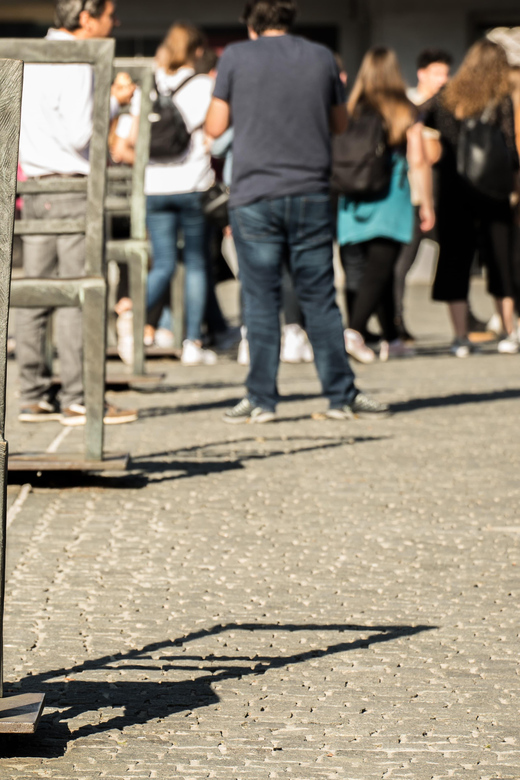
The main included feature is the professional guide. That matters on a walk where the buildings and streets cannot explain themselves. A guide can connect the wall, the square, and the pharmacy to daily life, deportations, survival, and acts of help. Without that explanation, you might see the sites but miss how their stories fit together.
The tour is offered in English, German, Italian, French, and Spanish. Choose a language you can follow comfortably; on a subject this serious, it is worth understanding the guide’s details rather than relying on a few familiar names or dates.
Guide quality is also the clearest point of praise in the small amount of feedback available. One attendee called the guide fantastic, while another praised the personal nature of the tour. Those comments are encouraging, but they do not tell you who will lead your departure, and no guide’s name is provided. Treat them as a positive sign, not a guarantee of a particular person or style.
The tour is led on foot and lasts one hour. No group size or walking distance is specified, so I would not assume a private tour or a particular pace. If you have a mobility question or need to know more about the route’s physical demands, ask the provider before booking.
Is $15 a fair price for an hour?
At $15 per person, this is a modestly priced way to get a guided introduction to a major part of Kraków’s wartime history. The price pays for a professional guide and a focused route through several meaningful sites. It is not a full museum visit or a long historical seminar, so the value depends on what you want: a clear, concise orientation or an extended exploration.
I think the price makes sense if you want the context that turns a short walk into more than a series of stops. The guide’s explanations are the core of the experience, particularly at the wall and the square, where the sites need interpretation. If you are already very familiar with the history and prefer to read at your own pace, you may find a guided hour less essential.
Food and drink are not included. Since the walk lasts one hour, that is unlikely to change the basic plan, but do not expect a café stop or refreshments as part of the experience. Check the available start times when choosing a date, and remember that the meeting point is at the entrance to the Schindler Factory Museum, not at the pharmacy or the square.
The booking terms offer flexibility: you can reserve now and pay later, and cancel up to 24 hours in advance for a full refund. That can be useful if your Kraków plans are still taking shape, but check the terms when booking so you know the deadline that applies to your reservation.
Who should take this walk?
This tour suits you if you want a short, guided introduction to the Kraków Ghetto and its principal memorial sites. It is especially useful if you value human stories alongside historical facts, since the pharmacy stop brings the actions of Pankiewicz and his staff into the route.
It can also work well as a first step before a longer independent visit to the area. You get a guide’s orientation, then can decide whether you want to revisit a particular site or spend more time reflecting. The one-hour length makes that plan practical, as long as you do not mistake the tour for a complete account of the district’s history.
The walk may be a poor fit if you want a leisurely pace with long pauses at every stop, or if you are looking for a broad, multi-hour history tour. The subject is serious, and the route covers suffering and deportations. It is worth considering whether that is the right choice for everyone in your party that day.
Should you book the Kraków Ghetto tour?
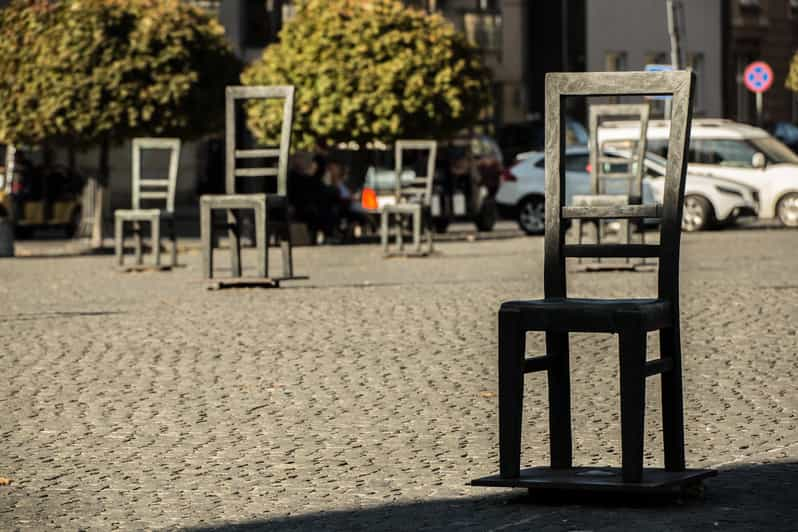
I would book this tour if you want a concise, guided way to understand Podgórze’s wartime sites. The surviving wall, the chair memorial, and Under the Eagle Pharmacy each offer a different angle on confinement, loss, and help. A professional guide can connect them in a way that is hard to get from a quick walk alone.
Choose it with realistic expectations. You are paying $15 for one hour, not a full-day history lesson, and the available information does not promise entry to the pharmacy or a named guide. If a focused route and a clear human context sound right, it is a worthwhile addition to a Kraków visit.
FAQ
How long is the guided tour?
The tour lasts one hour.
How much does the tour cost?
The listed price is $15 per person.
What languages are available?
The live guide is available in English, German, Italian, French, and Spanish.
Where is the meeting point?
Meet at the entrance to the Schindler Factory Museum and look for a guide holding an excursions.city sign.
What is included in the price?
A professional guide is included.
Are food and drinks included?
No. Food and drink are not included.
Can I cancel or reserve without paying immediately?
You can reserve now and pay later. You can cancel up to 24 hours in advance for a full refund.
Newly listed around Krakow
- Private Full-Day Zakopane and Thermal Baths Tour from Krakow★ 5.0 · 27 reviews
- Private Krakow to or from Airport Transfer★ 5.0 · 17 reviews
- Private Airport Transfer from/to Krakow Balice Airport★ 5.0 · 124 reviews
- Krakow: Polish Aviation Museum – Skip the Line Ticket★ 4.5 · 13 reviews
- Private Guided Walking Tour in Krakow Wine Bars★ 5.0 · 16 reviews
- Pierogi Cooking Class: Mastering the Art of Polish Dumplings★ 5.0 · 129 reviews
- Polish Countryside and Tyniec Abbey Bike Tour from Krakow★ 5.0 · 37 reviews
- Krakow Jewish District and Ghetto Guided Tour in a Small Group★ 5.0 · 12 reviews
Krakow Jewish Quarter Tours, compared.
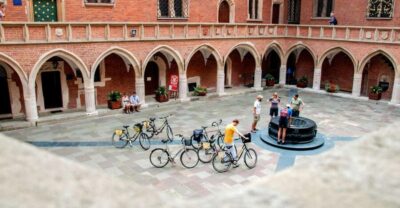
Bike Tour of Old Town, Jewish Quarter and the Ghetto
Read our review →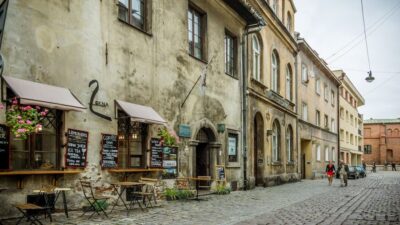
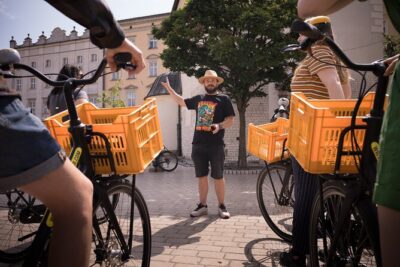
Full Bike Tour – the Old Town, Jewish Qtr & the Ghetto NEW BIKES
Read our review →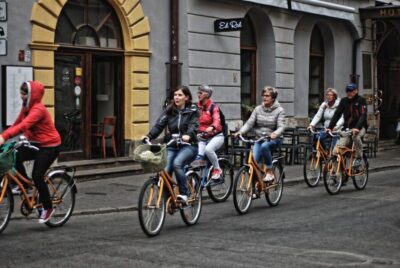
Bike Tour of the Old Town, Kazimierz, and the Ghetto
Read our review →

Jewish Quarter and Ghetto Electric Golf Cart Tour
Read our review →Browse the lists this tour appears in