
Reviewed · KRAKOW JEWISH QUARTER TOURS
Kraków old town and jewish quarter®
Kraków’s story is written across two very different neighborhoods: the medieval center and Kazimierz, where generations of Jewish life shaped the city. This three-hour walk links the two, with a Spanish-speaking historian to explain how their stories fit together. I like the route’s wide sweep of landmarks and its focus on the ties between Polish, Catholic, and Jewish history.
I also like that the guide does more than name buildings. The tour aims to explain why Kraków earned World Heritage status and how the city’s past affected Poland. A guide named Luis has led it with photos and drawings to make the history easier to follow.
The main trade-off is time: three hours covers a great deal, so some stops will be brief. The tour is in Spanish only, and its many locations may suit you better as an orientation walk than as a slow visit to every monument.
- Two historic districts: Follow a route through central Kraków and Kazimierz, each with a distinct past.
- A historian as guide: Your guide is a graduate in Geography and History.
- Wawel on foot: Climb the hill to explore the cathedral and the wider complex.
- Jewish history in context: Visit synagogues, a former cemetery, and memorials in Kazimierz.
- Three hours for a broad overview: Expect many landmarks and concise explanations rather than long visits at each stop.
- Practical booking terms: The price is $16 per person, with free cancellation up to 24 hours before the tour.
A three-hour walk through Kraków’s layered past
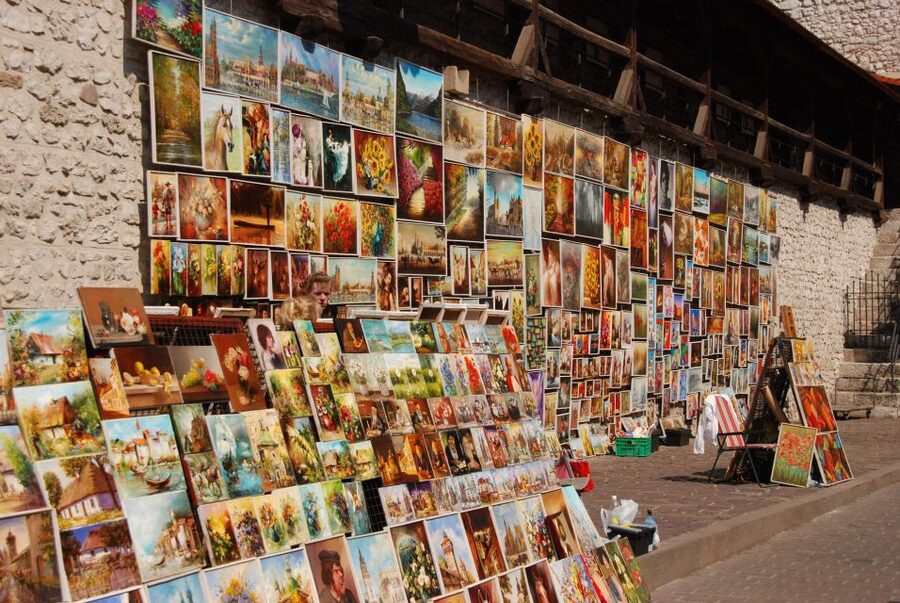
This tour is built around a useful idea: you understand Kraków better when you see its center and Kazimierz as parts of one city story, not as separate sightseeing zones. The route begins downtown, moves through the medieval core and university district, climbs to Wawel, then continues into the former Jewish quarter.
That breadth is the tour’s main strength, and also its limit. The listed route includes more than twenty landmarks. You will get a guided introduction to many of them, but three hours does not allow for a long stop at every church, square, synagogue, and memorial. Think of it as a history-rich first walk, not a substitute for returning to places that catch your eye.
The guide has a graduate degree in Geography and History, a good fit for a route that asks you to connect architecture, religion, politics, and daily life. The goal is not only to point out notable buildings, but to help you see how events in Kraków relate to the broader history of Poland.
Medieval walls and the route into the Old Town
The walk starts in the downtown area, with the Juliusz Słowacki Theater, medieval walls, the Barbican, and St. Florian’s Gate among the early landmarks. Together, these stops give you a quick sense of how the old city was protected and how people entered it.
The sequence is more useful than a string of unrelated photo stops. A wall or gate makes more sense when you can see how it sits within the city’s historic layout. The Barbican and St. Florian’s Gate are especially good landmarks for understanding the former defenses, while the theater adds a later architectural note to the opening stretch.
Do not expect a detailed visit inside every building. The tour description focuses on seeing and discussing sites along the route, and it does not say that admission to interiors is included. If a particular church or museum matters to you, ask before booking whether the guide plans to enter it.
More Jewish heritage tours around Krakow:
- Krakow: Schindler’s Factory & Ghetto Guided Tour
★ 4.7 · 1,694 reviews - Krakow: Jewish Quarter and Former Ghetto Tour
★ 4.9 · 1,441 reviews - Krakow: Bike Tour of Old Town, Jewish Quarter and the Ghetto
★ 4.9 · 1,155 reviews
Market Square’s monuments, from St. Mary’s to the Cloth Hall
From the medieval approach, the route heads to the Main Market Square, the city’s grand central space. Here the stops include St. Mary’s Basilica, the Cloth Hall, the old Town Hall Tower, the Church of St. Adalbert, the Adam Mickiewicz Monument, and the Eros Bendatto sculpture.
This concentration of monuments helps explain why Kraków’s historic center is a World Heritage Site. The square is not just a handsome open space: its buildings and public art show how religious, civic, commercial, and national life gathered around one central place. A guide can help you read those layers rather than simply look from one façade to the next.
The square is also a point where the pace may feel brisk. There is plenty to see, and the tour moves onward to the university quarter. If you want time to study the basilica or take a closer look at the Cloth Hall, plan to return later on your own.
Collegium Maius and Kraków’s academic connections
The university neighborhood adds a different dimension to the city’s story. Collegium Maius is the key stop, with the route also touching on figures such as Copernicus and John Paul II, who received academic training in Kraków.
This is where the guide’s historical framing can be especially useful. Famous names are easy to recognize, but the more interesting question is what the city’s schools and institutions meant within Poland’s history. The route’s emphasis on connections helps make the university area part of the broader story, rather than a detached list of notable people.
The itinerary also includes the Archbishop’s Palace and the Franciscan Basilica. These landmarks bring religious and civic history back into view before the climb to Wawel. You will see a shift in scale and setting as the route leaves the dense center for the hilltop complex.
Wawel Hill, cathedral, and the city’s symbolic heart
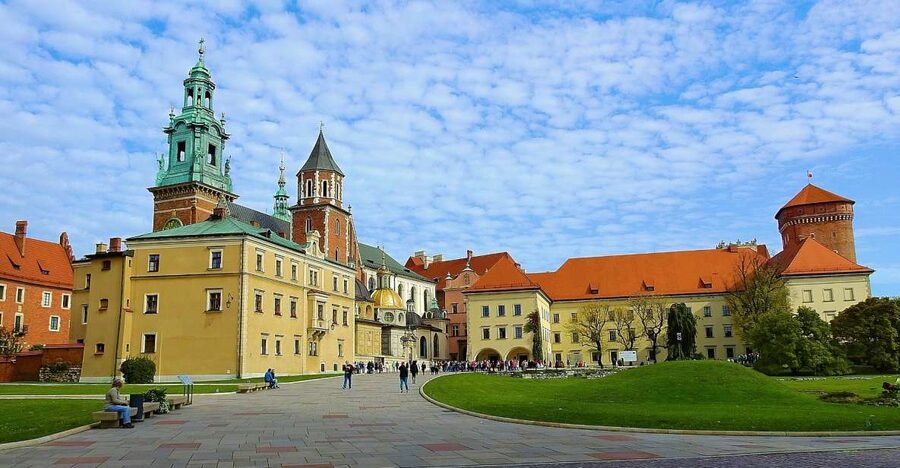
At Wawel, the group climbs the hill to consider the cathedral and the buildings that make up the complex. This is one of the route’s major turning points: the tour moves from the market and university districts to a site with a central place in Kraków’s public and religious identity.
The cathedral is the focus, but the surrounding complex matters too. The guide’s task is to help you understand how the buildings relate to one another and why the hill occupies such an important place in the city’s story. You will also see the dragon sculpture, a familiar Kraków landmark that offers a lighter note amid the heavier historical material.
The hill climb is worth keeping in mind when planning your day. The tour is listed as wheelchair accessible, but if you have a specific mobility concern, it is sensible to confirm how the route handles the ascent and each stop before booking. The tour does not specify how much time is spent inside buildings, so treat Wawel as a guided outdoor and architectural overview unless the provider confirms otherwise.
More Old Town tours around Krakow:
- Old Town Krakow & Wawel Castle Walking Tour
★ 5.0 · 1,508 reviews - Krakow: The Old Town Walking Tour
★ 4.8 · 794 reviews - Krakow: Old Town Guided Segway Tour
★ 4.7 · 756 reviews - Kraków: Old Town & Wawel Castle Walking Tour in English
★ 4.8 · 532 reviews
Crossing into Kazimierz and its Jewish past
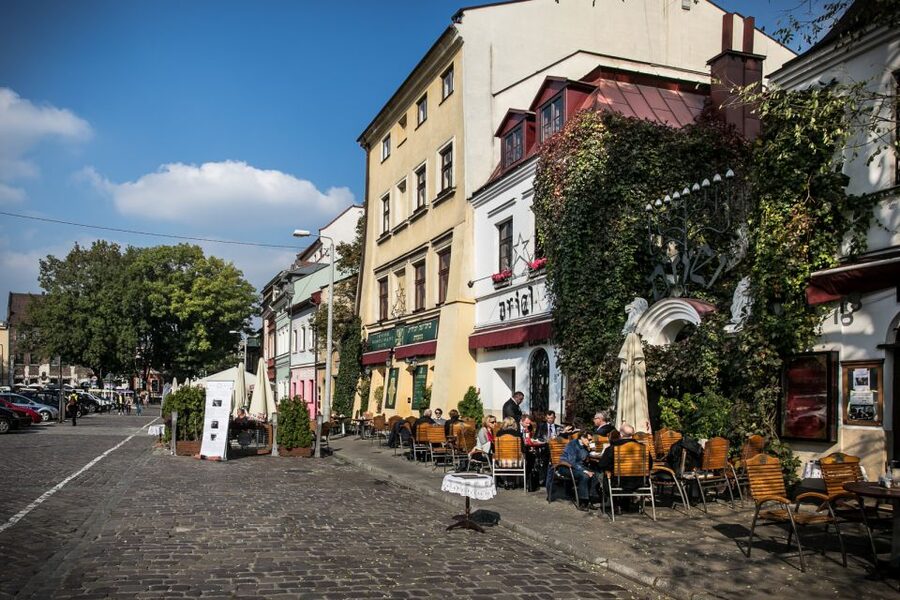
The second half turns to Kazimierz, one of Kraków’s most traditional neighborhoods and once home to the city’s Jewish community. The guide explains why Jewish communities settled here and how Jewish and Catholic communities lived alongside one another over time.
That context is essential. A walk through Kazimierz can otherwise become a collection of old buildings and memorials with little connection between them. Here, the aim is to look at the neighborhood as a place shaped by community, coexistence, conflict, and change. The route also addresses the Jewish community’s historical importance and the controversies surrounding its place in the city’s past.
Stops include the Tempel Synagogue and the Old Synagogue, along with the old Jewish cemetery, the medieval square, the former quarter walls, and New Square. The mix gives you more than a view of religious architecture. It points to the neighborhood’s daily and communal life, as well as the boundaries that once defined it.
The route includes memorials to Holocaust victims, the Righteous Among the Nations, and Polish victims during the occupation. These stops give the history a sobering close. The guide’s explanations matter here: the monuments mark different experiences of suffering and courage, and it is useful to understand what each one commemorates rather than treating them as interchangeable memorials.
How the guide’s style shapes the experience
The guide is a graduate in Geography and History, and the tour is designed around explanation as much as place. A guide named Luis has led this route using photos and drawings, a practical aid when a building’s earlier appearance or a past event is hard to picture from the street.
The tour’s strongest reported quality is the way the history is made clear and engaging. That matters on a route this full. You will hear about several communities, periods, and architectural styles, so a guide who gives the facts a shape can help you retain more than a list of names.
The pace has also been described as well balanced between explanations and moving from place to place. Still, pace is personal. If you like to linger at every stop, you may find the route short; if you want a broad introduction before exploring independently, the three-hour format is likely to suit you.
The tour is conducted in Spanish. That is a clear advantage if you are comfortable learning in Spanish, but it is not a multilingual outing. Choose it only if you can follow the guide’s explanations with ease, since the historical context is a major part of what you are paying for.
Is $16 good value for this route?
At $16 per person, the value rests mainly on the guide’s time and the amount of ground covered. You get a three-hour guided walk through the Old Town, university district, Wawel, and Kazimierz, with a historian connecting landmarks that are easy to visit separately but harder to interpret as one story.
The price does not include food or drinks. The tour information does not specify admission costs or state that entry to interiors is included, so do not assume that the fee covers tickets to buildings. Its value is strongest if you want an organized introduction and historical context, rather than a package with meals or included museum visits.
The route’s long list of stops can make $16 feel like a good deal, but there is a trade-off: you are buying breadth, not a deep visit to every site. If you already know Kraków well, or prefer spending an hour inside one museum, this may not be the best use of your time.
Who should book this Kraków walk?
I would choose this tour if you have limited time in Kraków and want a framework for exploring independently afterward. It links the city center, Wawel, and Kazimierz in a way that can help you decide which buildings, memorials, and streets deserve a closer look.
It is also a good fit if you care about history and want someone to explain the relationship between Polish, Catholic, and Jewish communities. The Kazimierz portion is not just an architectural stroll; it addresses settlement, coexistence, the Holocaust, and the occupation. That makes the walk more thoughtful than a route focused only on pretty streets.
You may want a different plan if you need a tour in English, want extended time inside specific sites, or prefer a slow pace with fewer stops. The route is listed as wheelchair accessible, but the climb at Wawel makes it worth checking the details if access needs are important to you.
For the meeting point, look for the guide carrying a gray umbrella. The tour lasts three hours, and availability depends on the starting times offered for your date. You can reserve without paying immediately, and cancellation is free up to 24 hours in advance.
FAQ
How long is the Kraków Old Town and Jewish Quarter tour?
The tour lasts three hours.
What language is the tour in?
The live guide speaks Spanish.
How much does the tour cost?
The price is $16 per person.
What areas does the route cover?
It visits Kraków’s downtown and historic center, the university neighborhood, the Wawel complex, and Kazimierz, the Jewish quarter.
Who leads the tour?
The guide is a graduate in Geography and History. A guide named Luis has led the route.
Are food and drinks included?
No. Food and drinks are not included.
What should I look for at the meeting point?
The guide will carry a gray umbrella.
Newly listed around Krakow
- Private Krakow to or from Airport Transfer★ 5.0 · 17 reviews
- Private Airport Transfer from/to Krakow Balice Airport★ 5.0 · 124 reviews
- Private Full-Day Zakopane and Thermal Baths Tour from Krakow★ 5.0 · 27 reviews
- Krakow: Polish Aviation Museum – Skip the Line Ticket★ 4.5 · 13 reviews
- Private Guided Walking Tour in Krakow Wine Bars★ 5.0 · 16 reviews
- Pierogi Cooking Class: Mastering the Art of Polish Dumplings★ 5.0 · 129 reviews
- Polish Countryside and Tyniec Abbey Bike Tour from Krakow★ 5.0 · 37 reviews
- Krakow Jewish District and Ghetto Guided Tour in a Small Group★ 5.0 · 12 reviews
Krakow Jewish Quarter Tours, compared.

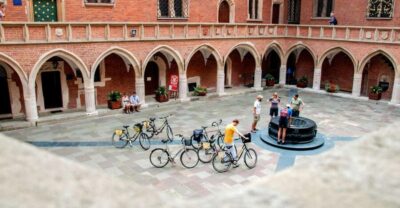
Bike Tour of Old Town, Jewish Quarter and the Ghetto
Read our review →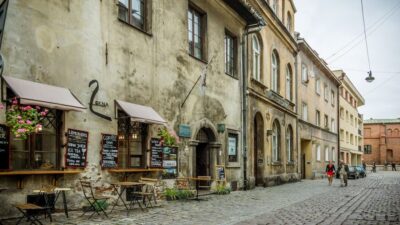
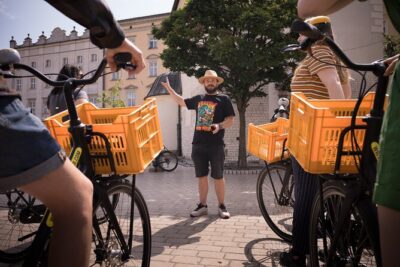
Full Bike Tour – the Old Town, Jewish Qtr & the Ghetto NEW BIKES
Read our review →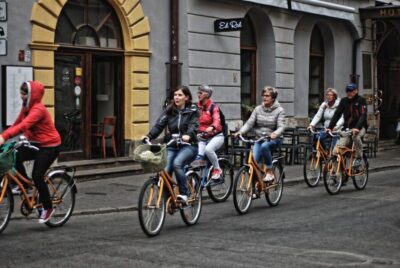
Bike Tour of the Old Town, Kazimierz, and the Ghetto
Read our review →
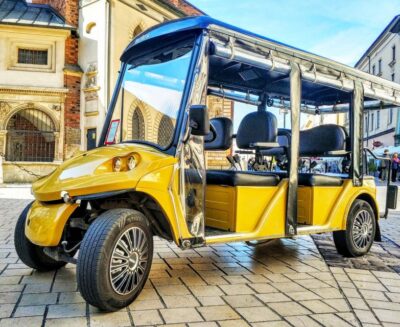
Jewish Quarter and Ghetto Electric Golf Cart Tour
Read our review →Browse the lists this tour appears in